

How to Choose Winter E-Bike Gloves for Warm Hands and Better Control
A pair of gloves can feel comfortable at the front door and awkward as soon as you reach for a brake lever. Thick fingertips may catch a neighboring button, the palm may bunch around the grip, or a jacket cuff may leave your wrist exposed.
For winter commuting, choose gloves that suit the weather and let you operate your own e-bike comfortably. Try the complete setup before leaving home, including liners and the jacket you plan to wear. Then take a short ride to check how the gloves feel in use.
Start With the Conditions on Your Actual Ride
Think about your whole trip. A short, sheltered errand and a long, exposed commute can call for different handwear, even when the forecast temperature is similar. Include your return journey, especially if you leave work after sunset.
Consider wind, the likelihood of rain, how long you will be outdoors, and how much effort you normally put into pedaling. Also allow for stops. Locking the bike, waiting at crossings, or fixing a problem can leave you outdoors longer than expected.
Choose a familiar route for your first test and identify a place where you can stop and adjust clothing. If conditions exceed what you can comfortably manage, shorten or postpone the ride.
Compare Warmth, Wind Protection, and Rain Protection
Glove descriptions often combine several features. Check what each one adds to the conditions you expect.
| Feature | What to look for | What to check in use |
|---|---|---|
| Insulation | Enough warmth for your expected trip | Whether fingers still move freely around the controls |
| Wind protection | A construction intended to limit airflow through the glove | Cold spots across the back of the hand and at the cuff |
| Water protection | A stated water-resistant or waterproof construction | Whether it suits the forecast and how the cuff meets your sleeve |
| Palm grip | A surface that holds the handlebar securely | Sliding, twisting, or fabric bunching when you reach for a lever |
| Breathability | Materials suited to your effort and weather | Dampness inside after the test ride |
| Cuff design | Coverage that works with your jacket | Wrist gaps, bulky overlaps, or loose straps near controls |
Water-resistant fabric can shed limited moisture. Waterproof gloves use a barrier intended to keep outside water out, although sweat and water entering the cuff can still leave the inside damp. REI discusses these differences in its glove buying guide. Read the specific product’s care instructions and weather claims before choosing a pair. REI Expert Advice
Check Fit in Your Riding Position
Use the maker’s sizing chart as a starting point, then try the gloves with your hands curved around a handlebar. Check the fingertips, finger webs, thumb, and palm while reaching for the levers. You should be able to close your hand and move each finger without pulling hard against the material. Excess fabric should stay clear of buttons and lever movement.
Wear any intended liners during the fitting. A glove that fits well by itself may feel crowded with a second layer inside. Cycling UK’s winter bikepacking guidance recommends trying gloves before buying and checking that a liner-and-outer combination has enough room. Cycling UK
Bring your jacket into the test too. Bend your elbows as you would when riding, turn the handlebar, and see whether the glove and sleeve maintain comfortable coverage. Fasten straps and secure loose ends.
Run a Stationary Control Test
Set the bike on firm, level ground and support it securely. Keep the power off while checking physical reach and clearance. Wear the exact gloves, liners, and jacket you intend to ride in.
- Hold the grips. Settle into your normal riding posture. Check that the palm stays in place as you move your fingers toward the levers.
- Reach both brake levers. Confirm that you can reach and squeeze each lever through its normal working movement while retaining a secure hold. Watch for material catching between a lever and the grip.
- Find the shifter. Check that your thumb and fingers can reach it without an awkward stretch. Verify actual gear changes during the short riding test while pedaling gently.
- Check the assistance controls. Identify each button by position. For any powered test, follow the owner’s manual and keep propulsion controls untouched. Operate one function at a time while stationary and securely supported.
- Check release and clearance. Confirm that your hand can leave the grip freely and that cuffs or straps stay clear when you turn the bar.
If you struggle, try another glove size or construction and repeat the test. A shop can help assess lever reach or control placement using the component manufacturer’s adjustment limits. Treat a new control setting as a change that also needs a riding test.
Choose Gloves, Split-Finger Gloves, or Liners by Feel
Separate-finger gloves allow individual finger movement. Split-finger designs group some fingers together and may provide a useful option for colder conditions. REI describes the differences in dexterity and warmth between these designs. Test the exact pair on your handlebar, since finger grouping can change how you reach a lever or shifter. REI Expert Advice
A thin liner can add flexibility to your clothing setup if the outer glove accommodates it. Put both layers on before checking grip and reach. Keep a dry spare pair accessible when you expect a long outing or wet conditions. Cycling UK includes spare gloves in its winter packing guidance. Cycling UK
Touchscreen fingertips can be convenient when stopped. Try your own device before relying on them, and make any phone or navigation adjustments from a safe stopping place.
Take a Short Ride Before Your Full Commute
Choose a dry, level, traffic-free area where your bike is permitted. Start with a few smooth starts and low-speed stops. Check shifting while pedaling gently, then practice finding the assistance buttons without hunting around the handlebar.
After several minutes, stop and check for a palm seam pressing into your hand, fingertips folding over a button, or dampness inside. Also notice whether the sleeves have moved and exposed your wrists. Make changes while stationary, then repeat the test.
Put gloves on while your hands are warm and manage clothing so you stay comfortable as effort changes. REI’s hand-warming guidance emphasizes staying dry and avoiding excessive sweating inside gloves. Let the test ride guide your next clothing choice. REI Expert Advice
Apply the Test to the WILDEWAY FW11S 3.0 Pro
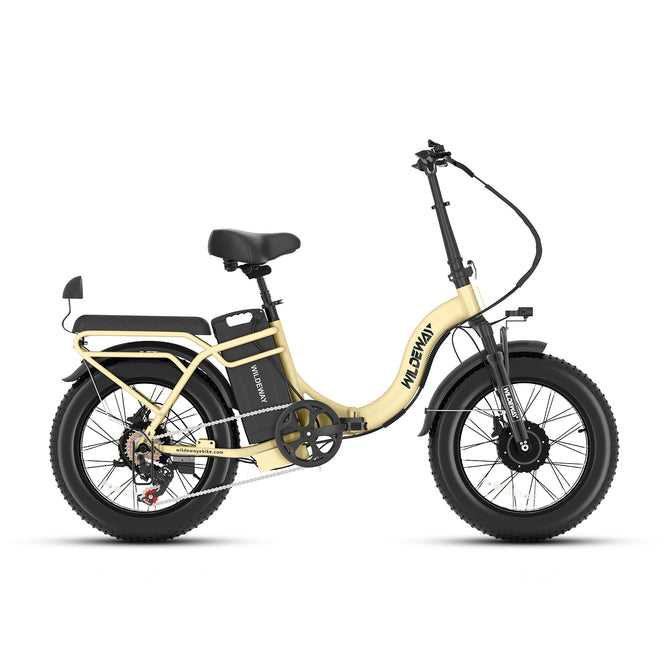
The current U.S. and Canadian listings describe the FW11S 3.0 Pro with a folding step-through frame, 20 × 3.0-inch tires, front suspension, and a removable 48V 35Ah battery. They offer mechanical and hydraulic brake configurations. Check which version you own, then perform the glove test on its actual levers and controls. Wildeway
Make that test part of your usual inspection. Confirm normal brake operation, tire condition, battery security, and folding-latch engagement before riding. WILDEWAY’s existing checklist gives you a sequence to follow. E-bike pre-ride safety checklist
Frequently Asked Questions
Can I wear ordinary winter gloves on an e-bike?
Try them with your bike and riding clothes. They need to provide a secure grip and allow reliable access to both brakes, shifting, and assistance controls. Cycling UK advises testing alternatives such as ski gloves because some can restrict movement. Cycling UK
Should I buy a larger size for liners?
Use the glove maker’s sizing advice and try both layers together. Check comfort with your hand open and curved around the grip. Move to another size or design if the layers pull tight, bunch up, or interfere with controls.
Will waterproof gloves keep my hands completely dry?
Outside water can enter through an open cuff, and perspiration can collect inside. Match the construction to your forecast, check sleeve coverage, and follow the drying instructions between rides.
What if my hands become too cold to use the brakes confidently?
Stop at a safe place while you can still do so under control. Get sheltered, warm up, and reassess your clothing and journey. Arrange another way home if you cannot comfortably operate the bike. Cycling UK’s autumn guidance highlights the difficulty of braking and changing gears with numb hands. Cycling UK
How should I dry winter cycling gloves?
Follow the label for the exact materials and membrane. Open the cuffs, remove liners if the design permits, and allow enough drying time before the next ride. Check for damp fingertips before packing them again.
For your next cold-weather commute, set aside a few minutes to check the complete glove-and-jacket setup on your own bike. Compare FW11S 3.0 Pro configurations for your market, then choose handwear that lets you use the fitted controls comfortably. Explore the FW11S 3.0 Pro


