

How to Plan an E-Bike Group Ride With Regular Bikes
A weekend ride can include an adult on a folding e-bike, a friend on a hybrid, and someone getting back on a bicycle after years away. On flat ground, the group may settle in easily. The first hill is often where the plan comes apart. A rider with motor assistance crests early while the last rider is still working uphill, and the front of the group turns before everyone sees where it went.
An e-bike group ride works best when everyone knows who sets the pace, where the next stop is, and what happens when someone needs extra time. Here’s how to plan a relaxed ride for people on separate bikes, with or without electric assistance.
Check two kinds of permission before you invite riders
Check the route
Look up each segment with the agency or land manager responsible for it. A loop can run through a municipal path, a park connector, and a privately managed property. Ask whether the exact e-bike configuration is permitted and check any posted speed, access, or seasonal restrictions. If a connector is off limits, choose an approved alternative before departure.
In the United States, the National Park Service explains that park superintendents can designate where e-bikes may be used. In Canada, Parks Canada’s Banff guidance lists designated routes and specifies which pedal-assist bicycles qualify for trail use. Check the page for your own destination and match the rules to the bike you’ll bring. U.S. National Park Service e-bike guidance · Parks Canada’s Banff e-bike guidance
Check the organizer’s rules
If you’re joining a club ride, read the listing and contact the leader if your bike’s eligibility is unclear. An organizer can set equipment and pace requirements for its own events. Seattle’s Cascade Bicycle Club, for example, publishes e-bike conditions for its Free Group Rides. Share the exact make and configuration when asking about eligibility, especially if the listing specifies an e-bike class. Cascade Bicycle Club’s Free Group Rides FAQ
Set a pace everyone can hold
Ask how long everyone has ridden recently and how they feel about hills, crowded paths, and frequent stops. Choose distance and terrain around the least experienced rider’s comfort. On an easy stretch, the lead can use the group’s ability to talk comfortably as a rough pacing cue. At the first stop, ask how the pace felt and whether anyone wants the shorter loop. A quick check-in gives riders an easy chance to speak up before fatigue sets in.
Assign a lead to set the pace and call turns. Assign a sweep to ride at the back and alert the lead if somebody needs to stop. If the ride is advertised as no-drop, explain exactly how you’ll keep riders together. For a small recreational group, that can mean the sweep stays with anyone who stops and the lead holds the rest of the group at the next agreed safe spot. Ottawa’s 613Cycling publishes a no-drop policy for its club rides. 613Cycling’s Full Ride Guidelines
| Where the group tends to spread out | What the lead does | What the e-bike rider does |
|---|---|---|
| Starting after a stop | Wait until the sweep is ready and roll away gently. | Leave room and use a smooth first pedal stroke. |
| A short climb | Hold a manageable pace and confirm the regroup spot before the hill. | Use enough assist to pedal comfortably at the group’s pace. |
| A busy shared path | Slow early, leave space, and go single file where appropriate. | Yield as required and wait for a clear opportunity before passing. |
| A turn after a long straight | Signal early and confirm everyone sees the turn. | Pass the call back and leave braking room. |
| A mechanical or comfort stop | Guide the others to the next safe place to pull aside. | If riding sweep, stay with the stopped rider and contact the lead. |
Use pedal assist to match the group
Start with a low setting you can control smoothly. Practice a few starts and stops in a clear area where your bike is permitted, then join the group once you know how the motor responds. If the group slows, ease your pedaling and slow early. Hold enough space to respond if the person ahead stops unexpectedly, and add more room when grip or visibility is poor.
On climbs, pick assistance that helps you hold the agreed pace. If the bike repeatedly surges ahead, ease your pedal input or select a lower setting when you can do so safely. Save setting changes that require looking at the display for a stop. When the route gets narrow or busy, keep your attention on the path and the riders around you.
Agree on calls, gaps, and regroup stops
Pick a few calls before leaving, such as “slowing,” “stopping,” and “gravel.” Pass a call back if riders farther behind may have missed it. Signal turns when you can do so safely, and ride at a gap that lets you brake without relying on the rider ahead to warn you. Keep your front wheel clear of the rear wheel in front of you. On shared paths, slow around other users, yield where required, and pass only when there’s room. Ottawa Bicycle Club’s Safety Basics
Pick regroup points you can describe clearly, such as a picnic shelter or a wide pull-off after a junction. Leave enough space for the entire group to get clear of traffic and path users. If riders get separated at a crossing, everyone follows the signal and crosses independently when allowed. The lead waits at the next safe spot. Count everyone before the group rolls again.
Try a short family ride with a planned shortcut
For a first outing, you might plan a 6-mile (about 10-kilometer) loop with a shortcut back to the start. Treat that distance as an example and shorten it if the least experienced rider would be happier with less. Choose a route with straightforward turns and a comfortable place for a break. Share the map, the shortcut, and the regroup stops before you leave. Ask everyone to wear a properly fitted helmet and do a quick check of the brakes, tires, and controls. WILDEWAY’s pre-ride safety checklist · U.S. Consumer Product Safety Commission’s micromobility safety guidance
At the halfway point, ask each person whether they want to continue or take the shortcut. Include the return leg in the decision, especially if someone is tiring or an e-bike is using charge faster than expected. If anyone wants to head back, agree who will accompany them and share the revised plan with the others before splitting up.
Where the WILDEWAY SummitX fits
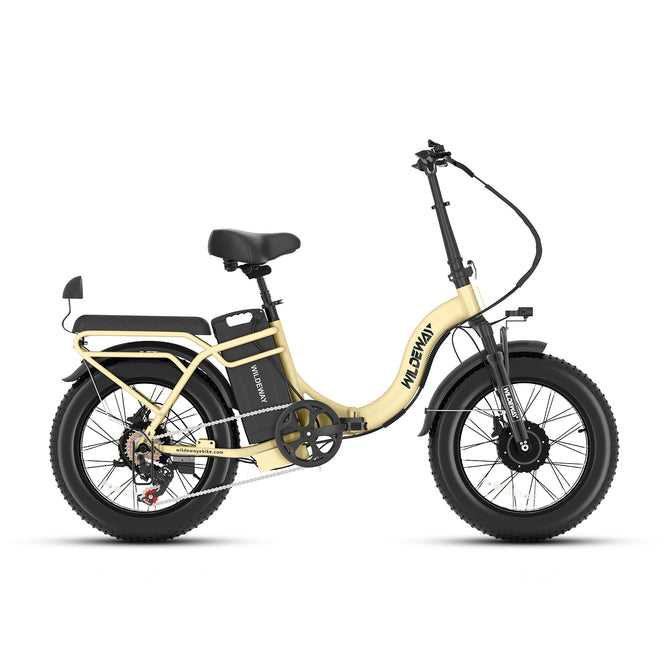
The WILDEWAY SummitX is a folding, step-through fat-tire e-bike with 20 × 4.0-inch tires, front and rear hydraulic disc brakes, and a choice of 32Ah or 60Ah battery configurations. For rides with friends or family, the questions to ask are how the bike feels at the group’s pace and whether the exact configuration is permitted on the route. Try low-speed starts, tight turns, and gradual stops in an authorized practice area. If you’ll transport the bike to the meetup, check that you can load and unload your chosen configuration. SummitX specifications for Canada
Frequently asked questions
Can I bring an e-bike to any group ride?
Check the event’s equipment policy and the rules for each segment. Send the organizer your bike’s exact configuration and ask before arriving if the listing leaves eligibility unclear.
Who should set the pace on a mixed bike ride?
Give that role to the rider who can maintain a steady pace and communicate with the sweep. Set the pace around the least experienced rider’s comfort. If they need to slow down, let the sweep call it early.
Is there a universal following distance for an e-bike group ride?
Use a gap that gives you time to see hazards and brake smoothly. Increase the gap on descents, in wet conditions, or when sightlines are limited. Keep wheels from overlapping and avoid close drafting on a casual ride.
What happens if someone can’t finish?
Agree on a shortcut or pickup option before departure. If someone needs to stop, have the sweep stay with them while the lead takes the rest of the group to a safe place. Share the revised plan and make sure the person has a way back before anyone leaves.
Conclusion
Choose an eligible route, set an easy pace, and tell everyone where you’ll regroup before rolling out. If you’re shopping for a folding fat-tire e-bike for outings with friends or family, compare the two SummitX configurations and check the organizer’s rules for the rides you want to join.


