

How to Ride an E-Bike in Strong Wind: Crosswind Control, Route Planning, and Range
Wind changes an e-bike ride in three ways. A headwind can increase energy use, a tailwind can allow speed to build, and a crosswind can move the bicycle sideways—especially at a bridge, field, building gap, or shoreline.
The correct response is not simply to add more assistance. Check official alerts, evaluate the route, leave more space, lower speed before exposed sections, and be willing to postpone the ride. No tire width, motor output, or battery size makes an e-bike safe in damaging winds.
First Decide Whether the Ride Should Happen
Begin with the complete forecast, not a weather-app icon. Check sustained wind, gusts, direction, timing, visibility, and alerts.
In the United States, the National Weather Service says a High Wind Warning means strong winds with even stronger gusts are occurring and people should seek shelter. A High Wind Watch means plans may need to change. NWS offices use local criteria, so one national mph cutoff is not a universal cycling rule. weather.gov
In Canada, Environment and Climate Change Canada describes warnings as “act now” messages and watches as a signal to prepare. Its impact-based alerts describe consequences such as debris, outages, falling branches, and travel disruption. Canada.ca
Postpone or end the ride when:
- An official warning tells people to seek shelter or avoid travel.
- Gusts make it difficult to hold a predictable line in a safe practice area.
- Falling branches, blowing debris, downed lines, dust, smoke, snow, or poor visibility are present.
- The route crosses an exposed bridge, ridge, waterfront, open field, or busy road with no safe alternative.
- You cannot complete the route with a conservative battery reserve.
- You are using a passenger, tall load, trailer, or setup not practiced in mild conditions.
Personal experience matters, but it does not override an official warning. If control feels uncertain, turn around before the next exposed section.
Understand Headwinds, Tailwinds, and Crosswinds
Headwind: More Time and Energy
A headwind increases aerodynamic resistance. Selecting more assistance can increase battery use. Bosch lists wind among the environmental factors that affect e-bike range. No universal range-loss percentage is honest because speed, posture, cargo, gusts, tire pressure, surface, load, and assistance all change the result. Find your eBike type & components
Tailwind: Easy Speed Can Hide Risk
A tailwind can make the bike feel unusually fast. Reduce assistance when needed and slow before intersections, curves, descents, or pedestrians. It may become a headwind after the wind shifts or on the return.
Crosswind: The Main Steering Challenge
Crosswinds can push a rider sideways. The strongest surprise often comes when leaving tree cover, passing buildings, crossing a bridge, or being overtaken. Cycling UK recommends avoiding exposed areas and busy roads when possible and watching for gusts. Cycling UK
A Wind-Ready E-Bike Planning Checklist
| Check | What to confirm | Safer response |
|---|---|---|
| Official forecast | Sustained wind, gusts, direction, timing and alerts | Delay, shorten or reroute when conditions exceed your control |
| Route exposure | Bridges, ridges, shorelines, open fields and tree hazards | Choose lower, sheltered streets or trails with safe exits |
| Return direction | Whether the return may face the strongest headwind | Put the harder leg earlier when practical and retain extra reserve |
| Bicycle | Tires, wheels, brakes, steering, battery and lights | Do not start with looseness, damage or abnormal controls |
| Rider | Helmet, eye protection, fitted clothing and gloves | Remove loose fabric and anything obstructing vision or controls |
| Cargo | Secure, low, balanced and within every rated limit | Remove unnecessary tall or broad items |
| Energy plan | Distance, surface, load, temperature, wind and assistance | Set an early turnaround point instead of using the final battery bar |
| Escape plan | Shelters, pickup points, alternate routes and contacts | Stop before conditions remove the safe option |
The U.S. Consumer Product Safety Commission recommends checking the handlebar, brakes, throttle, lights, tires, cables, and frame for damage and wearing a bicycle helmet. Steering, wheel security, brakes, and loose accessories deserve particular attention before a windy ride. CPSC.gov
Eight Techniques for Better Control in Gusts
1. Slow Down Before the Exposed Area
Reduce speed while still sheltered. This gives you more time to respond. Do not wait for the first gust on a bridge or open section.
2. Keep Both Hands on the Handlebar
Use a relaxed, secure grip with bent elbows and fingers ready for controlled braking. Do not hold a phone, adjust clothing, or drink in a gusty section.
3. Hold a Predictable Line
Look ahead and steer smoothly. Avoid riding beside a curb, drop-off, parked vehicle, or traffic with no recovery space. Continue following local traffic rules.
4. Anticipate Wind Shadows
Trees or buildings may provide temporary shelter. Prepare for a push when that shelter ends—and for the wind to disappear suddenly when entering cover.
5. Keep the Bike Stable, Not Rigid
Stay seated when it improves control, keep your feet firmly placed, and let bent arms absorb small movements. Avoid an extreme lean because gust direction can change. Stop if repeated corrections are needed.
6. Brake Before Turns and Hazards
Reduce speed while upright and before a curve, wet marking, gravel, or debris. Abrupt braking while leaned over leaves less traction available for handling a side gust. Use both brakes progressively.
7. Give Large Vehicles More Space
Large vehicles can create turbulence and temporarily block, then suddenly expose, a cyclist to crosswind. Avoid lingering beside them. Choose another route when a safe buffer is impossible.
8. Know When to Dismount
If a gust moves you out of line, stop safely. Find shelter away from traffic, trees, power lines, and flying debris, following local emergency guidance.
Plan Battery Reserve for the Wind—not the Brochure
Battery capacity is stored energy, not a guaranteed distance. A large battery can support a longer plan, but it does not cancel the extra demand of a headwind or repeated acceleration.
Plan conservatively:
- Note wind direction for both outbound and return legs.
- Start with a route shorter than your calm-weather ride.
- Use the lowest assistance that still supports safe, predictable riding.
- Set an early turnaround point based on time and energy, not just distance.
- Keep a larger reserve when no sheltered shortcut or pickup is available.
Do not chase your normal average speed into a headwind. That can use energy quickly and reduce the margin needed for the return.
Manage Cargo and Accessories
Secure pannier lids, straps, covers, locks, clothing, and tools so nothing can reach a wheel, brake, drivetrain, or control. Keep loads low, balanced, and within all limits. Remove unnecessary tall or broad items.
A passenger, trailer, or bulky load changes side area and handling. Follow manufacturer instructions and local rules. Never use a windy ride as the first test of a new setup.
How This Applies to the WILDEWAY Wander Ultra
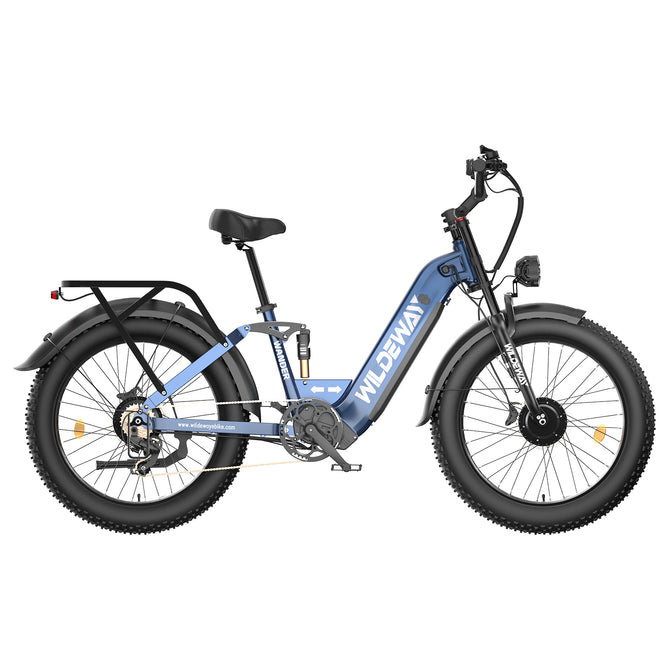
The current Wander Ultra page consistently describes an adventure-oriented step-through e-bike with a 48V 30Ah battery, 1,440Wh of stored energy, 26 × 4.0-inch tires, front and rear suspension, hydraulic disc brakes with 203mm rotors, and an integrated rear rack. Those features can support longer mixed-surface trips, but none is a wind-safety guarantee. wildewayebike.com
| Wander Ultra feature | Useful planning context | Important limit |
|---|---|---|
| 1,440Wh battery | Substantial stored energy for route planning | Does not guarantee range in a headwind |
| 26 × 4.0-inch tires | Broad footprint on suitable surfaces | Cannot prevent a gust from moving the bike |
| Front and rear suspension | Helps isolate some surface impacts | Does not correct wind-induced steering |
| Hydraulic disc brakes with 203mm rotors | Supports progressive speed control when maintained | Does not make debris, low grip or excessive wind safe |
| Integrated rear rack | Provides a defined place for compatible cargo | Loads must remain low, secure, balanced and within limits |
Because the Wander Ultra is a full-size e-bike, practice low-speed starts, stops, turns, and dismounts in calm weather before planning an exposed adventure. Check the current product page, owner’s manual, local access rules, and exact configuration before riding.
After a Windy Ride
Power the bike off and check for tire or drivetrain debris, loose rack hardware, damaged cables or wheels, and changed brake or steering feel.
Arrange professional inspection after a crash, hard impact, visible damage, or unexplained control problem. Never approach downed power lines.
Frequently Asked Questions
How Windy Is Too Windy for an E-Bike?
There is no universal mph cutoff for every rider and location. Follow official alerts and consider route exposure, gust strength, debris risk, visibility, bike load, and your ability to hold a predictable line. Postpone the ride when authorities advise shelter or travel changes, or whenever control feels uncertain.
Do Fat Tires Make an E-Bike Safe in Crosswinds?
No. Tire size may affect surface contact and handling, but a strong gust can move any bicycle. Tire condition, pressure, surface grip, speed, load, rider skill, and available space still matter.
How Much Range Will a Headwind Remove?
No fixed percentage applies. Wind direction and strength interact with speed, posture, assistance, cargo, tire pressure, surface, temperature, and total load. Shorten the route and maintain a larger reserve instead of relying on a generic deduction.
Is a Tailwind Always Helpful?
No. It can reduce effort, but it can also allow speed to build and may become a headwind on the return. Continue monitoring speed and changing weather.
Should I Lower Tire Pressure for Wind?
Do not change pressure solely on a generic wind tip. Use the range printed on the tire and the bicycle or tire manufacturer’s guidance. Too little or too much pressure can reduce control or damage components.
What Should I Do if a Gust Pushes Me Sideways?
Avoid an abrupt overcorrection. Slow smoothly, move to the first safe stopping place, and reassess. If you cannot hold a predictable line, do not continue into a more exposed section.
Conclusion
Strong-wind riding is a go-or-no-go decision before it is a bike-handling challenge. Read the full forecast, respect warnings, choose a sheltered route, slow before exposure, keep both hands on the controls, secure cargo, and preserve extra battery reserve.
When gusts make steering unpredictable, stopping is the skilled decision.
For riders planning mixed-surface adventures with substantial battery capacity, fat tires, full suspension, and cargo utility, explore the WILDEWAY Wander Ultra. Match the bike to a conservative route plan—and let the weather decide when the adventure should wait.


