

Mechanical vs. Hydraulic Disc Brakes: Why Heavy-Duty E-Bikes Need Hydraulic Stopping Power
When buying an electric bike, most shoppers focus heavily on top speed, motor wattage, and battery range. However, there is one crucial specification that directly dictates your safety every single time you hit the throttle: your braking system.
Stopping a traditional acoustic bicycle weighing 25 pounds is simple. But stopping a modern heavy-duty electric bike—which often weighs between 70 to 90 pounds, travels at speeds up to 28 MPH, and carries a rider or cargo up to 400 lbs—requires an immense amount of stopping force.
When browsing e-bike specs, you’ll encounter two main types of disc brakes: Mechanical Disc Brakes and Hydraulic Disc Brakes.
Are mechanical brakes good enough for daily riding? Why are hydraulic brakes widely considered mandatory for fat-tire and dual-motor e-bikes? In this deep-dive guide, we explore the physics of e-bike braking, compare mechanical vs. hydraulic systems head-to-head, and explain why Wildeway equips its heavy-duty models with premium hydraulic stopping power.
The Physics of Stopping a 70lb+ Electric Bike
To understand why brakes matter so much on an e-bike, we need a quick look at physics. Kinetic energy ($E_k = \frac{1}{2}mv^2$) dictates how much energy your brakes must convert into heat to bring your bike to a complete stop.
┌──────────────────────────────────────────────────────────────────────────────┐
│                    E-BIKE STOPPING PHYSICS COMPARISON                       │
├───────────────────────────┬──────────────────────┬───────────────────────────┤
│ Bike Category             │ Total Weight (w/ Rider)│ Kinetic Energy at 20 MPH │
├───────────────────────────┼──────────────────────┼───────────────────────────┤
│ Traditional Road Bike     │ ~180 lbs (81 kg)     │ Baseline (1x Energy)      │
│ Lightweight Commuter E-Bike│ ~220 lbs (100 kg)   │ ~1.2x Energy              │
│ Heavy-Duty Fat Tire E-Bike│ ~330–450 lbs (200kg) │ 2x to 2.5x Energy!        │
└───────────────────────────┴──────────────────────┴───────────────────────────┘
Because kinetic energy increases exponentially with speed and linearly with mass, a heavy fat-tire e-bike traveling at 20–28 MPH generates more than double the kinetic energy of a standard bicycle.
If your brakes lack responsiveness or require massive hand strain, your stopping distance expands drastically—increasing the risk of collisions in emergency situations.
Mechanical vs. Hydraulic Disc Brakes: How They Work
Both mechanical and hydraulic systems use brake pads to squeeze a rotating metal rotor mounted on the wheel hub. The key difference lies in how force is transmitted from your fingers on the handle lever to the brake caliper.
  [ MECHANICAL BRAKES ]
  Hand Lever ──> Steel Cable (Stretches & Friction) ──> Single Piston Pushes Rotor

  [ HYDRAULIC BRAKES ]
  Hand Lever ──> Sealed Mineral Oil Line (Zero Loss) ──> Dual Pistons Clamp Rotor
1. Mechanical Disc Brakes (Cable-Actuated)
-
Mechanism: Squeezing the brake lever pulls a woven steel cable inside a flexible plastic housing. This tension rotates a lever arm on the caliper, which pushes a single brake pad against the spinning rotor.
-
The Reality: Steel cables stretch over time, accumulate dirt, rust inside housing, and create mechanical friction. Most mechanical calipers only move one pad, bending the metal rotor slightly to make contact with the fixed pad on the opposite side.
2. Hydraulic Disc Brakes (Fluid-Actuated)
-
Mechanism: Replacing the steel cable with a sealed, fluid-filled hose (usually mineral oil or DOT fluid). Squeezing the lever pushes a master cylinder, creating hydraulic fluid pressure that travels instantly down the hose.
-
The Reality: Liquid does not compress. Hydraulic pressure pushes two opposing pistons simultaneously, clamping the rotor evenly from both sides. There is zero cable stretch and virtually no internal friction.
Head-to-Head Comparison: 4 Key Performance Metrics
┌─────────────────────────┬──────────────────────────┬──────────────────────────┐
│ Feature                 │ Mechanical Disc Brakes   │ Hydraulic Disc Brakes    │
├─────────────────────────┼──────────────────────────┼──────────────────────────┤
│ Power & Efficiency      │ Moderate (15–25% loss)   │ Superior (Near 100%)     │
│ Hand Effort Required    │ Heavy (Requires 4 fingers)│ Ultra-Light (1-2 fingers)│
│ Modulation & Precision  │ Stiff / "All-or-Nothing" │ Smooth & Progressive     │
│ Maintenance Frequency   │ High (Weekly cable tuning)│ Low (Self-adjusting)     │
│ All-Weather Performance │ Cable can freeze/contaminate│ Completely Sealed    │
└─────────────────────────┴──────────────────────────┴─────────────────────────┘
1. Braking Power & Stopping Distance
Hydraulic systems transfer hand force with near-100% efficiency. Because hydraulic fluid doesn't stretch or flex like steel cables, your lever pull translates into immediate, biting stopping power at the caliper. On average, hydraulic brakes can shorten e-bike emergency stopping distances by up to 30%.
2. Hand Strain & Fatigue Relief (50% Less Pull Force)
On long downhill descents or during frequent stop-and-go city commuting, squeezing stiff mechanical brake levers causes severe hand, wrist, and forearm fatigue. Hydraulic brakes require up to 50% less hand effort. A gentle squeeze with just one or two fingers is enough to bring a fully loaded e-bike to a smooth halt.
3. Modulation & Precise Speed Control
Modulation refers to your ability to finely control braking force between a gentle speed scrub and a hard emergency lockup.
-
Mechanical brakes often feel wooden or "binary"—either too weak or sudden lockup.
-
Hydraulic brakes offer linear, silky-smooth modulation, giving you precise control on loose gravel, wet asphalt, or muddy trails where wheel lockup causes skidding.
4. Maintenance & Self-Adjustment
As brake pads wear down on mechanical systems, you must manually tighten cable tension and turn barrel adjusters weekly to keep the levers from pulling all the way to the handlebars.
Hydraulic disc brakes feature auto-adjusting pistons. As pads wear thin, fluid automatically compensates in the line, keeping your lever feel completely consistent over thousands of miles.
3 Reasons Heavy Fat-Tire E-Bikes Must Have Hydraulic Brakes

If you ride a lightweight 250W commuter, mechanical brakes might suffice for casual flat-road riding. But for heavy-duty, multi-battery, or fat-tire e-bikes, hydraulic brakes are a vital safety requirement.
       [ WHY HEAVY FAT-TIRE E-BIKES REQUIRE HYDRAULIC BRAKES ]

  ┌─────────────────────────────────────────────────────────────────┐
  │ 1. Heavy Fat-Tire Rotational Inertia (20" x 4.0" & 26" x 4.0")   │
  │ 2. All-Weather Reliability (Sealed Against Rain, Mud & Snow)     │
  │ 3. Integrated Electronic Motor Cut-Off Safety Sensors           │
  └─────────────────────────────────────────────────────────────────┘
1. Taming Fat Tire Inertia & 400 lb Payload Capacities
Wide 4.0-inch fat tires provide incredible traction and stability, but their heavy rubber rotational mass requires substantially more force to slow down. When combined with dual batteries or heavy cargo payloads (up to 330–400 lbs), single-piston mechanical brakes quickly overheat, suffer from brake fade, and fail to provide confidence.
2. All-Weather & Winter Riding Reliability
Water, road salt, grit, and ice are the mortal enemies of mechanical cables. Water trapped inside cable housing can freeze in winter or rust the wire, causing stuck brakes. Hydraulic systems are completely sealed from the environment, delivering identical, reliable stopping power whether it's 90°F in summer or 15°F in a winter snowstorm.
3. Integrated Automatic Motor Cut-Off Sensors
Powerful e-bike motors produce massive torque. If you pull the brake lever while accidentally keeping the throttle engaged, a motor-versus-brake "tug-of-war" occurs. Premium hydraulic brake levers feature built-in electric cut-off sensors that instantly kill motor power the millisecond you touch the brake lever, bringing you to a safe, controlled stop.
Built for Safety: How Wildeway Equips You with Maximum Braking Confidence
At Wildeway, rider safety is embedded in our engineering DNA. We know that high-torque, long-range e-bikes demand high-specification safety systems.
         [ Wildeway Premium Braking Standards ]

   ┌─────────────────────────────────────────────────────────┐
   │ 🔴 High-Capacity Dual-Piston Hydraulic Calipers         │
   │ 🔴 Heavy-Duty 180mm Stainless Steel Heat-Vent Rotors   │
   │ 🔴 Instant Electronic Motor Cut-Off Safety Integration   │
   │ 🔴 Ergonomic Anti-Slip Alloy Levers                     │
   └─────────────────────────────────────────────────────────┘
Featured Models Built with Standard Hydraulic Brakes:
-
Wildeway SummitX AWD Fat Tire Series: Engineered with dual high-torque motors, the SummitX comes standard with dual-piston hydraulic disc brakes and massive 180mm ventilated rotors to conquer steep mountain descents and slippery mud with absolute authority.
-
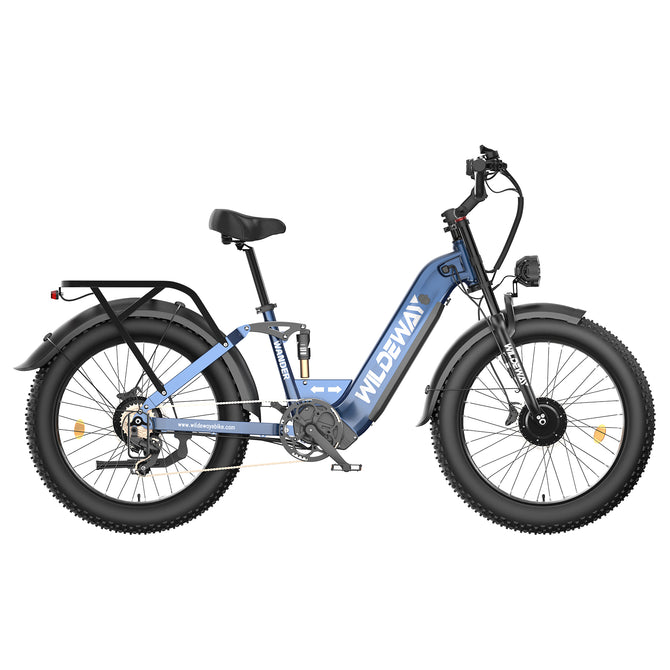
Wildeway Wander Max Heavy-Duty Cruiser: Designed for big & tall riders and high payloads (up to 400 lbs), the Wander Max relies on high-pressure mineral oil hydraulics to ensure effortless, one-finger stopping power even when fully loaded.
👉 [Discover Wildeway Hydraulic-Equipped E-Bikes]
Simple Maintenance Tips for E-Bike Hydraulic Brakes
While hydraulic brakes require far less daily hassle than mechanical cables, a little preventive maintenance goes a long way:
-
Keep Rotors Clean: Never touch brake rotors with bare fingers (skin oils cause brake squeal). Clean rotors with 90%+ isopropyl alcohol and a clean microfiber cloth.
-
Inspect Brake Pad Thickness: Check your brake pads every 500 miles. If the pad material wears below 1.5mm, swap them out for fresh compound pads.
-
Annual Fluid Bleed: Perform a quick hydraulic fluid bleed once every 12–18 months (or have your local bike shop do it) to purge tiny air bubbles and keep lever response ultra-crisp.
Final Thoughts: Never Compromise on Stopping Power
Speed is thrilling, range is liberating, but braking power is non-negotiable. Upgrading from mechanical to hydraulic disc brakes is the single most impactful safety investment you can make on an electric bicycle.
With lighter lever pull, shorter stopping distances, zero cable stretch, and all-weather reliability, hydraulic brakes give you total confidence to explore any terrain.


