
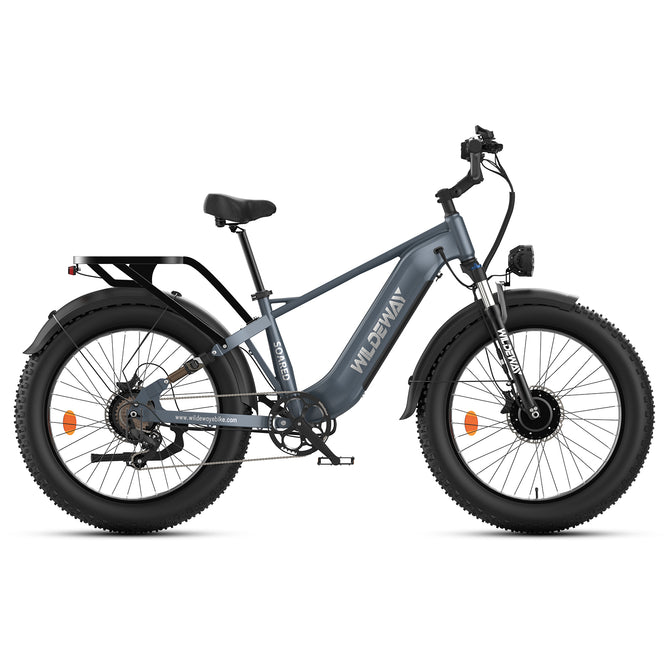
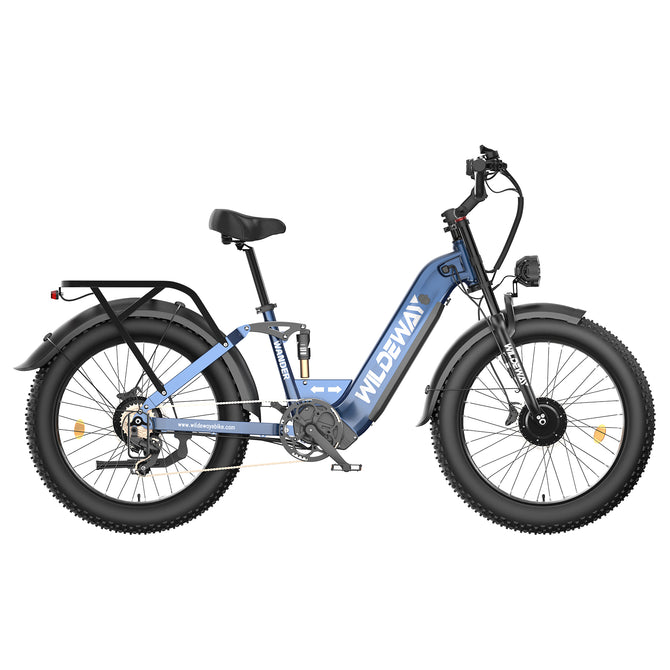
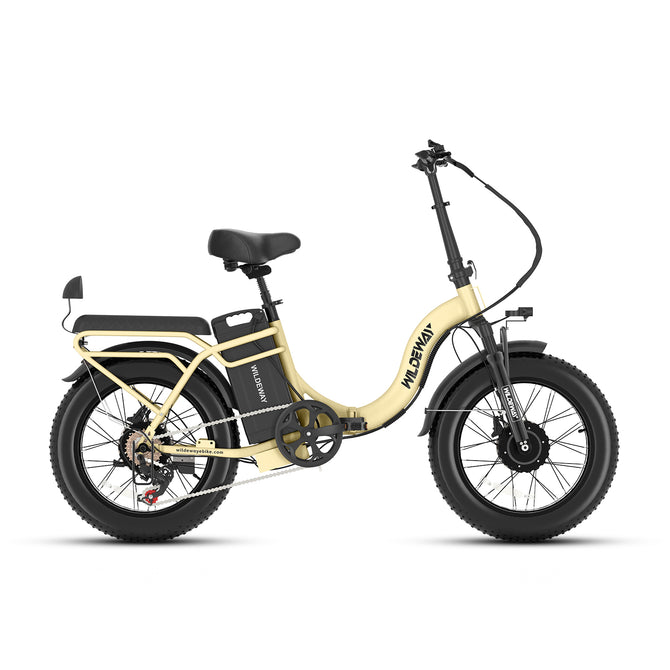
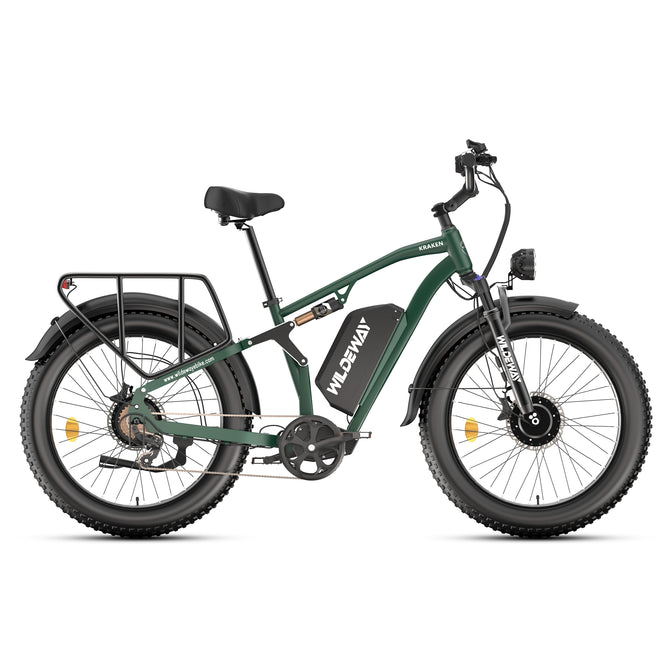

Riding through unplowed snow trails, thawing mud, and freezing slush requires far more than raw throttle power. To maintain momentum without spinning out or suffering sudden battery shutdown, riders must balance All-Wheel Drive (AWD) power delivery, tire pressure floatation, and cell-level thermal management.
1. AWD Traction Control: Pushing and Pulling Through Mud & Powder
Single rear-hub motors struggle in loose mud and soft snow because rearward weight bias causes the drive wheel to dig a hole while the unpowered front wheel acts as a plow.
AWD dual-motor systems transform off-road traction by changing the physics of momentum:
-
Dual-Wheel Traction Vectors: The front motor pulls the front tire over soft berms while the rear motor pushes, eliminating rear fishtailing and front-end drag.
-
Distributed Torque Output: Splitting 120 N.m of torque across two wheels reduces wheelspin by 50% per tire, allowing tread lugs to bite into soft earth rather than churning it up.
-
Low-Speed Torque Control: Engaging pedal-assist level 1 or 2 with dual motors provides steady low-RPM pull without sudden throttle spikes that break traction.
2. PSI Tuning: Managing Contact Footprints
Tire pressure determines whether a fat tire floats on top of soft ground or sinks into ruts. In extreme snow and mud, standard road pressures (18-22 PSI) lead to instant traction loss.
| Off-Road Surface | Recommended Tire Pressure | Functional Goal & Handling Effect |
| Smooth Pavement / Hardpack Dirt | 16–22 PSI | Minimum rolling resistance; fast steering response |
| Packed Snow / Firm Trail Mud | 8–12 PSI | Moderate tire deformation for cornering grip |
| Deep Slush / Loose Powder | 5–8 PSI | Maximize contact patch; float over soft snow layer |
| Sticky Deep Mud / Soft Sand | 3–6 PSI | Maximum tire siping expansion; prevents rim sinkage |
Pro Tip: Always keep your rear tire 1 to 2 PSI higher than the front tire to support rider weight and cargo without causing pinch flats or rim strikes over hidden rocks.
3. Thermal Battery Defense: Preventing Severe Voltage Sag
Lithium-ion battery performance drops significantly in sub-freezing weather. At -10°C (14°F), internal chemical resistance increases, causing up to 30% to 40% loss in effective range and severe voltage sag under sudden throttle acceleration.
To maintain battery lifespan and prevent mid-ride shutdowns in sub-zero environments:
-
Pre-Heat Indoors: Store and charge your battery at indoor room temperature (20°C / 68°F). Install the battery onto the frame right before riding so the cells retain core warmth.
-
Equip Neoprene Thermal Sleeves: Wrap the downtube battery in a 3mm–5mm neoprene thermal sleeve. This traps the heat generated by electrical discharge during the ride.
-
Graduate Your Acceleration: Avoid jumping directly into high PAS levels or wide-open throttle on cold starts. Draw current gradually for the first 10 minutes to gently warm up the cell chemistry.
Mastering the Extreme Off-Road Trail
By pairing low-PSI tire floatation with dual-motor AWD traction and cold-weather battery prep, you can transform unrideable winter slush and deep sticky mud into your personal playground.


