

Why Is My E-Bike Making Noise? A Practical Guide to Clicks, Squeaks, Rubbing, and Rattles
A new sound does not automatically mean your e-bike is unsafe, but it means something changed. Note whether it happens while coasting, pedaling, braking, crossing bumps, or using motor assistance. Diagnose the trigger first, then inspect the matching system.
Start With the Safety Decision: Stop or Keep Testing?
Before trying to name the sound, decide whether the bike is safe to move. Stop riding and arrange qualified service if you notice any of the following:
- Braking power has dropped, a lever pulls unusually close to the handlebar, brake fluid is visible, or you hear metal-on-metal grinding.
- A wheel is loose, difficult to turn, or visibly out of line.
- The handlebar or steering feels loose.
- The frame, fork, rim, or brake rotor looks cracked or deformed.
- A cable is cut, pinched, or exposing conductors.
- The battery is swollen, dented, unusually hot, leaking, smoking, popping, or producing an unusual odor.
- The sound began after a crash, hard impact, or deep-water exposure.
The U.S. Consumer Product Safety Commission advises micromobility riders to inspect the brakes, throttle, tires, cables, frame, lights, and other controls for damage. CPSC.gov Shimano’s disc-brake guidance likewise flags abnormal noise, fluid leakage, and a cracked or deformed rotor. si.shimano.com These are reasons to pause—not to “ride it and see.”
Identify When the Noise Happens
A bike frame can carry sound away from its true source. A click that seems to come from the motor may actually begin at a pedal, saddle rail, loose rack fastener, or brake rotor. Use the trigger—not just the apparent location—to reduce the possibilities.
Ask five questions:
- Does it happen while coasting with your feet still?
- Does it repeat once per pedal revolution or only under hard pedaling?
- Does it appear only while braking?
- Does it occur only over bumps?
- Does it change when assistance is turned off?
Do not run the motor indoors or put hands near a moving wheel, chain, or rotor. If the bike passes its safety checks, use a short, low-speed ride on a flat, traffic-free surface to reproduce the noise. A phone recording can help a technician later.
E-Bike Noise Troubleshooting Table
| Sound and trigger | Areas to inspect | First safe action | Stop riding when… |
|---|---|---|---|
| Light scrape once per wheel turn | Rotor alignment, fender, tire, wheel seating | Power off; spin the wheel without touching moving parts | Wheel binds, rotor is damaged, or braking changes |
| Squeal only during braking | Water or dirt, contaminated pads or rotor, bed-in, pad wear | Let brakes cool and dry; inspect without adding lubricant | Braking is weak, fluid leaks, or grinding begins |
| Click while pedaling | Pedals, crank area, chain, chainring, rear cogs | Note whether it repeats every pedal turn and in every gear | A crank is loose, chain skips, or a crack is suspected |
| Rattle over bumps | Rack, fender, light, battery seating, cables, suspension hardware | Remove loose cargo; check visible fasteners against the manual | Battery or wheel moves, steering has play, or structure is damaged |
| Hum only under assistance | Motor and normal drive-system operation | Compare assist off versus on and note load and speed | It is suddenly louder, rough, hot, intermittent, or paired with an error |
| Grinding while coasting | Wheel bearings, brake contact, hub, foreign object | Stop and inspect wheel rotation | The wheel resists turning or has side-to-side play |
What Common E-Bike Noises May Mean
Brake Squeal, Chirping, or Rotor Rub
A brief squeal after rain, a puddle, or washing can come from moisture or dirt on the braking surface. Persistent squeal can point to contamination or an incomplete bed-in process. SRAM’s technical guidance distinguishes temporary water or dirt from longer-lasting contamination and recommends following the brake manufacturer’s cleaning, replacement, and bed-in procedures. SRAM
A rhythmic “shh-shh” while the wheel spins often means the rotor contacts a pad once per revolution. Do not bend the rotor by hand, touch it immediately after braking, or spray chain lubricant near it. A qualified shop should handle rotor truing, hydraulic leaks, bleeding, or uncertain pad wear.
Clicking or Creaking While Pedaling
First test the timing. Park Tool notes that a noise occurring once per crank revolution often comes from the crank or pedal area, while a sound every two or three revolutions may involve the chain. If it continues when you stop pedaling and coast, look beyond the drivetrain. Park Tool
Simple causes include a shoelace tapping the crank, a dry chain, a loose pedal, or cargo touching a moving part. More involved causes include the crank interface, chainring, rear cogs, or bottom bracket. Use only bicycle-chain lubricant, keep it away from rotors and pads, and never guess at tightening torque.
Rattles Over Bumps
A rattle that appears only on rough ground often starts with an accessory rather than the drive system. Empty panniers, keys, a loose light, a fender stay, cable housing, or an unsecured rack load can all amplify through the frame.
Remove cargo and check one item at a time. Confirm that the battery is seated and locked according to the owner’s manual, then inspect visible accessory mounts. If the sound remains, or if the headset, wheel, fork, rear shock, or suspension pivot moves, stop testing and book service.
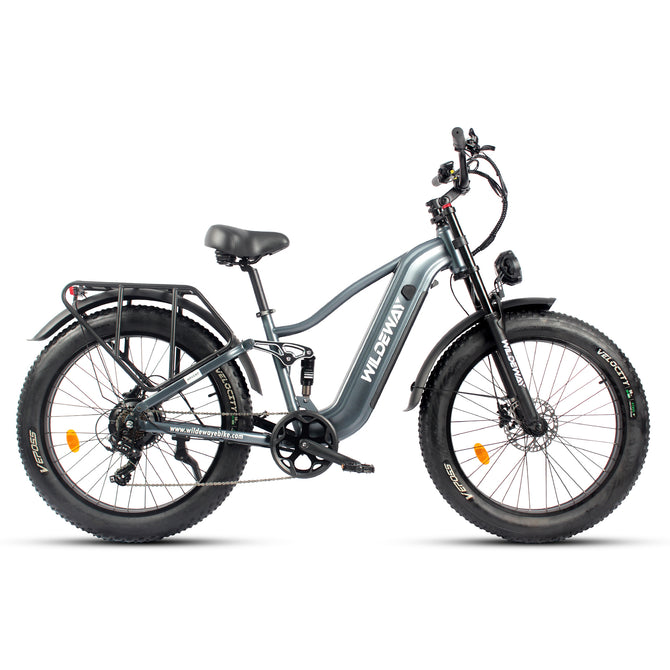
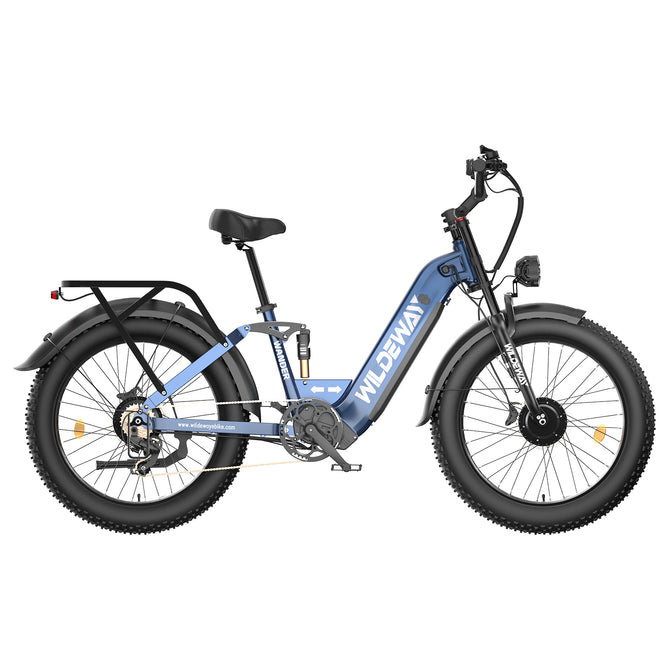
This distinction is especially useful on an all-terrain bike such as the WILDEWAY Advent. Its 26 × 4.0-inch tires, front and rear suspension, hydraulic disc brakes, and single rear-hub motor suit everyday roads and uneven weekend routes. Wildeway Rough surfaces and carried gear can make a small loose item easier to hear. That does not identify the cause by itself; it simply gives you a logical front-to-back inspection order.
Wheel Ticks, Scrapes, and Grinding
With the system off, look for a pebble in the tread, a fender touching the tire, a loose or broken spoke, side-to-side rim movement, or an unsecured wheel. Keep fingers clear of rotors and spokes.
A faint freewheel clicking while coasting can be normal. A new metallic tick, grinding sensation, difficult rotation, or lateral wheel play is not something to mask with lubricant. Bearings, spokes, axle hardware, and rear-hub-motor wiring require the right tools and model-specific procedures.
Motor or Electrical-System Noise
Electric motors are not silent. A steady hum that changes smoothly with assistance and load may be normal for that bike. The useful comparison is the bike’s own baseline: Is the sound new, abruptly louder, rougher, or accompanied by surging, power loss, heat, or a display error?
Switch the system off if those symptoms appear. Do not open the motor, controller, battery, or connector housing. Health Canada says not to use swollen, dented, torn, or otherwise damaged lithium-ion batteries and warns against modifying them. Canada.ca Send WILDEWAY support or a qualified technician the model, mileage, error code, conditions, and a short recording.
A Safe 10-Minute Listening Routine
- Write down the trigger. Coasting, pedaling, braking, bumps, steering, or assistance?
- Power the bike off. Follow the owner’s manual before touching or moving components.
- Remove loose cargo. Check keys, straps, bags, bottles, and tools first.
- Inspect front to back. Check the tire and wheel, brake, fork, cockpit, frame, battery, crank and chain, rear suspension, rack, rear wheel, and motor cable.
- Check controls. Test both brakes and steering while stationary.
- Reproduce one condition at a time. Only if the bike passes the safety checks, make a low-speed test in a safe area.
- Record the evidence. Capture the sound, display, assist level, speed, surface, weather, and whether braking or pedaling changes it.
This record is more useful than saying the bike “sometimes squeaks” and can prevent unnecessary adjustments.
What Can You Check Yourself—and What Needs a Technician?
Most riders can remove loose cargo, visually inspect the bike, confirm battery seating, clean the chain correctly, and check accessory fasteners using the manual’s torque values. Clean brake rotors only by the manufacturer’s approved method; never use an oily household spray.
Leave hydraulic-brake bleeding, rotor truing, wheel truing, bearing service, suspension-pivot work, motor disassembly, controller work, and battery repair to a qualified technician. If a suspected frame or fork crack is involved, do not test ride. Park Tool’s drivetrain guidance specifically recommends stopping and seeking professional evaluation when a crack is suspected. Park Tool
FAQ: E-Bike Noises
Is a humming e-bike motor normal?
Often, yes. A consistent hum under assistance can be normal. Investigate when it is new, much louder, rough, intermittent, or accompanied by heat, power loss, vibration, or an error code.
Why do my e-bike brakes squeal after rain?
Water or dirt can cause temporary disc-brake noise. Let the brakes cool and dry, then follow the brake manufacturer’s cleaning guidance. Persistent squeal, weak braking, leaks, or grinding requires inspection.
What causes one click per pedal revolution?
The timing points toward the pedal, crank, chainring, shoe, or nearby contact point, but it is not a diagnosis. Check for visible looseness or interference and use specified torque values; seek service if the crank moves or the sound persists.
Why does my e-bike rattle only on rough roads?
Remove cargo first, then check racks, fenders, lights, cable housing, battery seating, and other accessories. If the rattle comes with play in the wheel, steering, fork, shock, or frame, stop riding.
Should I diagnose an e-bike noise after a crash?
Do not use a ride test as the first check. Power the bike off, inspect the frame, fork, wheels, brakes, controls, cables, and battery, and arrange professional inspection if there was a hard impact or any uncertainty.
Conclusion: Treat the Trigger as Your Best Clue
The smartest response to an e-bike noise is not random tightening or extra lubricant. Identify when the sound occurs, rule out safety-critical problems, inspect the matching system, and document what changes it. Small accessory rattles can be simple; brake, wheel, frame, battery, or electrical warning signs deserve immediate attention.
For riders who want full-suspension comfort and fat-tire stability for daily roads and weekend paths, explore the WILDEWAY Advent. Already riding one? Keep the owner’s manual handy, use model-specific service guidance, and contact WILDEWAY Support when a sound cannot be safely identified.


