
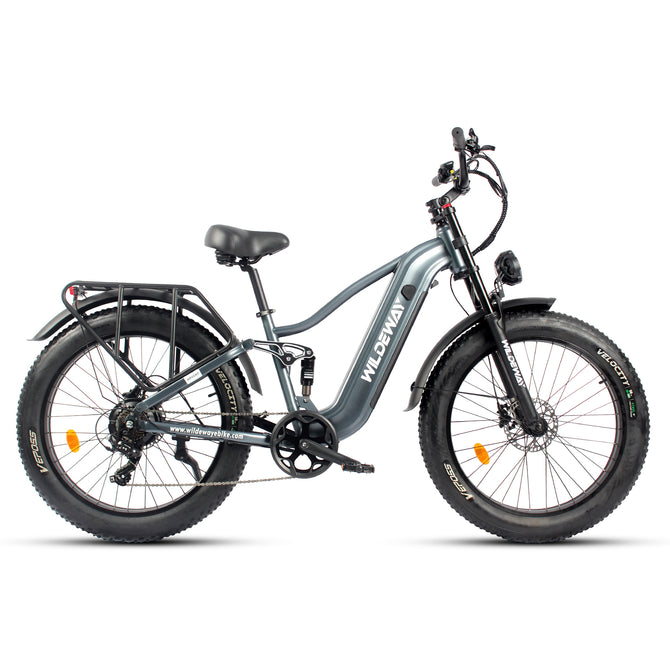
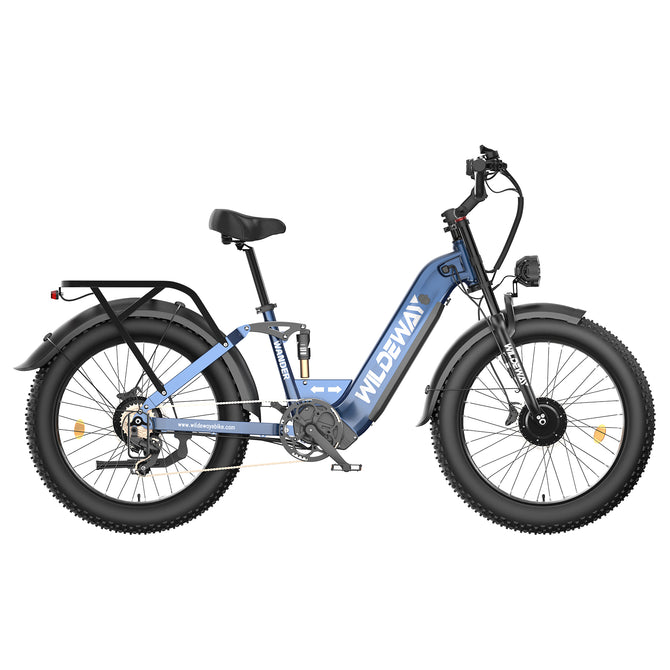
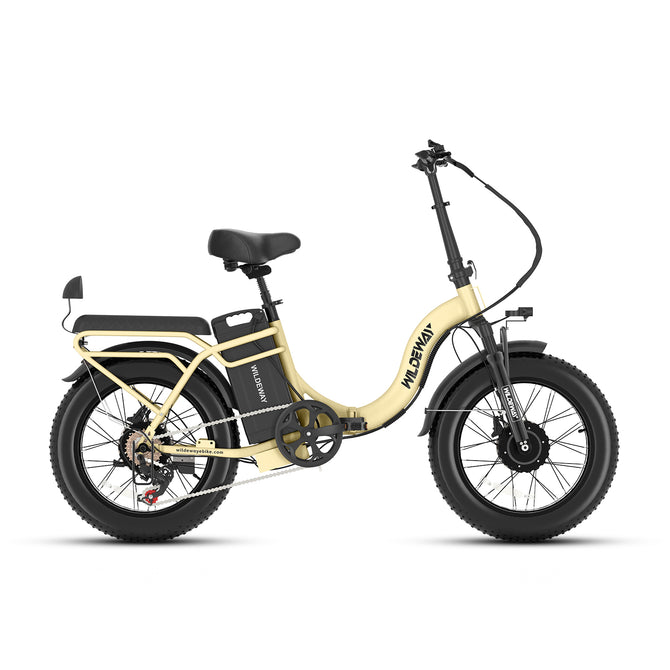
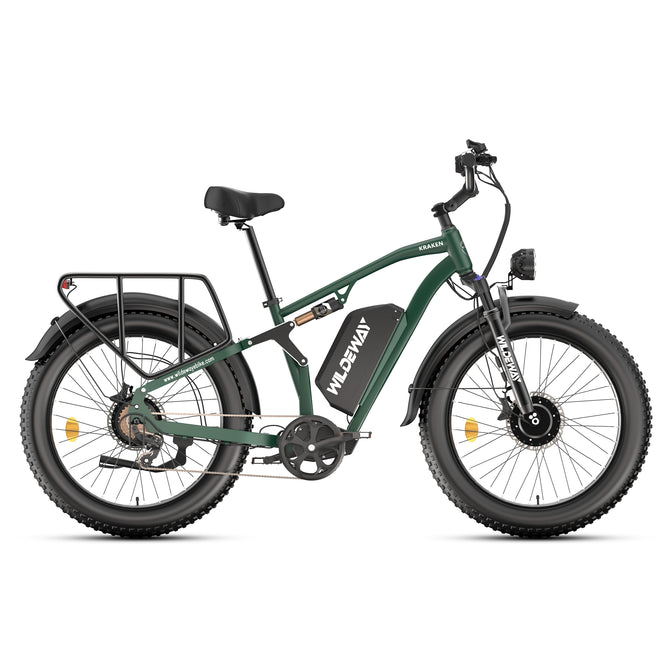

WILDEWAY FW11 vs FW11S 3.0 Pro: Which Folding E-Bike Is Right for You?
The main difference between the WILDEWAY FW11 3.0 Pro and FW11S 3.0 Pro is the frame. The FW11 uses a traditional step-over folding frame, while the FW11S has a low step-through frame that is easier to mount during frequent stops. Their current published specifications otherwise share many important features.
That simple frame difference can have a surprisingly large effect on everyday use. The best choice depends less on motor power and more on how often you stop, how you get on the bike, where you store it, what you carry, and which riding position feels most natural.
This FW11 vs FW11S 3.0 Pro comparison explains the practical differences to help riders in the United States and Canada choose more confidently.
FW11 vs FW11S: The Short Answer
Choose the WILDEWAY FW11 3.0 Pro if you prefer a traditional step-over frame, like the appearance of a more conventional bicycle, and feel comfortable lifting your leg over the center tube.
Choose the WILDEWAY FW11S 3.0 Pro if you prioritize easy mounting, frequent stop-and-go riding, carrying cargo, or a more accessible frame opening.
Based on the current published specification tables, the two models share the same battery capacity, rear-hub motor rating, wheel size, recommended rider-height range, folding capability, front suspension travel, drivetrain, and cargo limits. The frame is therefore the most meaningful buying decision.
FW11 and FW11S Specification Comparison
| Feature | FW11 3.0 Pro | FW11S 3.0 Pro |
|---|---|---|
| Frame style | Step-over folding frame | Step-through folding frame |
| Frame material | Aluminum alloy | Aluminum alloy |
| Battery | Removable 48V 35Ah, 1680Wh | Removable 48V 35Ah, 1680Wh |
| Motor | Rear hub, 750W sustained, 1000W peak | Rear hub, 750W sustained, 1000W peak |
| Published torque | Up to 68Nm | Up to 68Nm |
| Tires | 20 × 3.0 inches | 20 × 3.0 inches |
| Suspension | 65mm front suspension | 65mm front suspension |
| Drivetrain | 7-speed | 7-speed |
| Recommended rider height | 5'2"–6'4" | 5'2"–6'4" |
| Maximum payload | 350 lb | 350 lb |
| Rear-rack capacity | 90 lb | 90 lb |
| Published pedal-assist range | Up to 110 miles | Up to 110 miles |
| Published throttle-only range | Up to 65 miles | Up to 65 miles |
Range figures are manufacturer estimates under controlled conditions. Actual results vary with rider and cargo weight, assist level, speed, hills, wind, temperature, tire pressure, road surface, and frequency of acceleration.
Always review the current product page before ordering because availability, included accessories, brake options, pricing, and specifications can change.
The Biggest Difference: Step-Over vs Step-Through
FW11 3.0 Pro: Traditional Step-Over Design
The FW11 uses an aluminum-alloy step-over folding frame. A step-over frame includes a center tube that runs higher between the seat area and the front of the bike.
This design may suit riders who:
-
Prefer the look and feel of a traditional bicycle
-
Are comfortable lifting a leg over the frame
-
Usually begin and end rides without many intermediate stops
-
Want a conventional frame shape
-
Do not need the lowest possible entry point
The step-over design should not automatically be described as better, stronger, or more capable without model-specific structural testing. Its main practical distinction here is its shape and the mounting movement it requires.
For a rider who has used standard bicycles for years, the FW11 may simply feel more familiar.
FW11S 3.0 Pro: Accessible Step-Through Design
The FW11S replaces the higher center tube with a lower, more open step-through area. Instead of swinging one leg over the rear of the bicycle, the rider can step through the middle of the frame.
This can be helpful for:
-
Delivery riders making frequent stops
-
Commuters wearing work clothing
-
Riders carrying bags or groceries
-
Riders with limited hip or knee mobility
-
Shorter riders who want easier mounting
-
Anyone who regularly stops in traffic
-
Riders using a loaded rear rack
A step-through frame does not remove the need for correct sizing or balance. Riders should still adjust the seat and handlebar position and practice starting, stopping, and dismounting in a traffic-free area.
Which Model Is Better for Commuting?
Both models are designed around the same compact folding and long-range platform, so either can work for commuting. Your stop frequency is the more useful deciding factor.
The FW11 may be suitable if your commute is relatively continuous—for example, riding from home to an office with only a few stops.
The FW11S may be more convenient in dense urban areas where you repeatedly stop at intersections, apartment entrances, stores, transit stations, or delivery locations. Its open center makes repeated mounting and dismounting easier.
For either model, plan a route that reduces exposure to high-speed traffic. The National Highway Traffic Safety Administration recommends selecting lower-traffic, lower-speed routes when possible and using a bicycle that fits the rider properly.
Which Model Is Better for Delivery Work?
For most stop-and-go delivery situations, the FW11S has the practical advantage.
A delivery rider may get on and off the bike dozens of times during a shift. The step-through opening can reduce the amount of leg movement required, especially when a delivery bag or cargo box is installed on the rear rack.
The FW11 remains an option for riders who prefer a step-over frame and are comfortable with the mounting movement. However, a tall rear bag can make swinging a leg over the back of any bicycle less convenient.
According to the current product pages, both models have:
-
A rear rack rated for up to 90 pounds
-
A maximum combined payload of 350 pounds
-
A 48V 35Ah removable battery
-
A 7-speed drivetrain
-
20 × 3.0-inch tires
-
Front suspension
Payload includes the rider, cargo, accessories, locks, bags, and anything else carried by the bike. Cargo must be secured, balanced, and kept within both the rack limit and total payload limit.
Which One Is Easier to Store?
Both models use folding frames, making them more adaptable to apartments, garages, RV storage areas, offices, and compatible vehicles than a comparable non-folding bicycle.
However, “folding” does not necessarily mean lightweight.
The current published specifications list a bike weight of 72.8 pounds without the battery and a 22-pound battery. That means owners should plan carefully before lifting either model into an SUV, truck bed, RV compartment, or upstairs apartment.
Before purchasing, measure:
-
Vehicle cargo-opening width and height
-
Available trunk or storage-floor area
-
Elevator and doorway dimensions
-
Available space inside an apartment or garage
-
The height over which the bike must be lifted
Removing the battery before lifting can reduce the weight being handled and prevents the battery from moving during loading. Follow the owner’s manual when removing, carrying, and reinstalling it.
Are 20 × 3.0-Inch Tires a Good Middle Ground?
Both the FW11 and FW11S use 20 × 3.0-inch tires according to their current specification tables.
This size sits between a narrow city-bike tire and a wider 4.0-inch fat tire. For many riders, it offers a useful balance of:
-
Compact folded proportions
-
Stability on imperfect pavement
-
Comfort over small bumps
-
Urban maneuverability
-
Less visual and rolling bulk than larger fat tires
The tires do not make the bikes suitable for every surface or condition. Wet leaves, ice, deep sand, loose gravel, and painted road markings can still reduce traction.
Check tire pressure before riding and follow the pressure range printed on the tire or stated by the manufacturer. The ideal pressure depends on the rider, cargo, road surface, and tire specifications.
Battery and Real-World Range
Both product pages currently list a removable 48V 35Ah battery with 1,680Wh of capacity. They also publish estimates of up to 110 miles with pedal assist and up to 65 miles using throttle-only operation.
The phrase “up to” is important.
Real-world range can be reduced by:
-
Higher assistance settings
-
Frequent full-throttle acceleration
-
Heavy rider or cargo weight
-
Steep hills
-
Headwinds
-
Low temperatures
-
Underinflated tires
-
Soft or uneven terrain
-
Repeated stopping and starting
-
Higher riding speeds
Instead of planning around the maximum advertised estimate, track your own battery consumption on familiar routes and maintain a reasonable reserve.
For battery safety, the U.S. Consumer Product Safety Commission recommends using only the charger supplied or recommended by the manufacturer, remaining present while charging, and unplugging the device after charging is complete.
Canadian riders can also review Health Canada’s battery safety guidance, which advises using the correct charger and storing batteries in a dry, secure, well-ventilated location away from heat and direct sunlight.
Mechanical or Hydraulic Brakes?
The product pages currently show mechanical and hydraulic disc-brake configurations.
Mechanical disc brakes use cables to operate the calipers. They can be straightforward to inspect and service, although they may require periodic cable adjustment.
Hydraulic brakes use fluid pressure and generally require less hand effort while providing smoother modulation. They may appeal to riders carrying heavier loads, riding in hilly areas, or making frequent stops.
Brake availability may vary by selected version. Check the exact option in the product selector and shopping cart before ordering.
Whichever system you choose, test both brakes before every ride and arrange service if braking becomes weak, inconsistent, noisy, or difficult to control.
How to Decide in Five Questions
Ask yourself these questions before choosing:
1. Can I comfortably lift my leg over a center tube?
If yes, either bike may work. If that movement is difficult, the FW11S is likely the better choice.
2. How often will I get on and off?
Frequent stops favor the FW11S. Longer uninterrupted rides make the difference less important.
3. Will I carry cargo on the rear rack?
Both bikes offer the same published rack capacity, but the FW11S is generally easier to mount without swinging a leg over rear cargo.
4. Which frame shape feels more familiar?
Some riders prefer the traditional appearance of the FW11. Others value the accessible opening of the FW11S.
5. Do I need to lift the bike regularly?
Both models are substantial e-bikes. Confirm that you can safely handle the weight and that the folded bike fits your storage or transportation space.
Final Verdict
The FW11 and FW11S 3.0 Pro are closely related models. Based on their current published specifications, the motor, battery, tires, suspension, drivetrain, range estimates, rider-height range, and cargo ratings are essentially the same.
The deciding factor is the frame:
-
Choose the FW11 3.0 Pro for a traditional step-over configuration.
-
Choose the FW11S 3.0 Pro for easier mounting and frequent stop-and-go use.
Neither frame is universally better. The right choice is the one that fits your body, riding routine, cargo needs, and storage situation.
Compare the current FW11 3.0 Pro and FW11S 3.0 Pro product pages before deciding.
Frequently Asked Questions
What is the main difference between the FW11 and FW11S?
The FW11 Pro has a step-over folding frame, while the FW11S Pro has a low step-through frame. Their current published specifications otherwise share many major components and performance figures.
Is the FW11S only designed for women?
No. Step-through frames are suitable for riders of any gender. They are especially useful for frequent stops, loaded rear racks, work clothing, or riders who want easier mounting.
Which model is better for older riders?
The FW11S may be more accessible because it requires less leg lift when mounting. However, individual mobility, balance, strength, bike fit, and total bike weight should all be considered.
Do the FW11 and FW11S use the same battery?
The current product pages list a removable 48V 35Ah, 1,680Wh battery for both models. Confirm the selected version and current specifications before ordering.
Can both bikes fit inside an SUV?
Both models fold, but vehicle cargo spaces differ considerably. Measure the opening and usable interior space first. The bikes are also relatively heavy, so plan how they will be lifted and secured.
Which model is better for food delivery?
The FW11S is generally more convenient for delivery riders because its step-through frame supports frequent mounting and dismounting, especially when cargo is attached to the rear rack.


