

How to Charge an E-Bike Battery Safely: A Practical Guide for U.S. and Canadian Riders
An e-bike battery is one of the most important components of an electric bicycle. It provides the energy that makes longer commutes, family rides, errands and outdoor adventures possible.
But charging a lithium-ion battery requires the same kind of attention you would give any high-energy electrical product.
The good news is that safe charging does not need to be complicated.
For most riders, the essential routine is straightforward: use the correct charger, inspect the battery before charging, charge it in an appropriate location, follow the manufacturer's instructions and stop using a battery that shows signs of damage.
The U.S. Consumer Product Safety Commission (CPSC) and Health Canada have both published safety guidance specifically addressing lithium-ion batteries used in e-bikes and other micromobility products. U.S. Consumer Product Safety Commission
This guide explains how to build a practical charging and storage routine for an e-bike in the United States or Canada.
Why E-Bike Battery Charging Safety Matters
Most modern e-bikes use rechargeable lithium-ion battery systems.
Lithium-ion technology offers a useful combination of energy density, weight and rechargeable performance. However, damaged, improperly modified or incorrectly charged lithium-ion batteries can overheat and create fire hazards.
The CPSC has issued multiple warnings involving e-bike batteries and chargers.
For example, in November 2025, the CPSC warned consumers to immediately stop using certain Rad Power Bikes lithium-ion batteries after receiving reports of fires and property damage. The agency specifically noted that some incidents occurred when the batteries were not charging and were simply being stored. U.S. Consumer Product Safety Commission
This does not mean that normal e-bike charging is inherently unsafe.
Instead, it highlights why riders should follow the charging instructions supplied with their particular bicycle and battery.
The Basic E-Bike Charging Routine
A good charging routine can be summarized in six steps:
- Inspect the battery.
- Use the correct charger.
- Charge at an appropriate temperature.
- Place the battery on a stable, non-combustible surface.
- Keep the charging area visible and away from exits and combustible materials.
- Unplug according to the manufacturer's instructions when charging is complete.
These steps are consistent with guidance from U.S. and Canadian safety authorities. Canada
1. Use the Original or Approved Charger
One of the most important rules is also one of the easiest to follow:
Use the charger supplied with your e-bike or a replacement charger specifically approved by the manufacturer.
Do not assume that a charger is safe simply because the connector physically fits your battery.
The CPSC has specifically warned consumers about chargers marketed as “universal” for e-bikes and other micromobility products. A charger can physically connect to a battery while still having incompatible electrical characteristics. U.S. Consumer Product Safety Commission
Health Canada similarly advises consumers to use the charger supplied with the product and to contact the original manufacturer or retailer when a replacement charger is required. Canada
Avoid:
- Generic chargers from unknown sellers
- Modified chargers
- Homemade charging cables
- Chargers with damaged connectors
- Chargers with damaged insulation
- Chargers with unclear voltage specifications
- “Universal” chargers that have not been specifically approved for your model
For a WILDEWAY e-bike, use the charger specified for the particular battery system rather than assuming that a charger from another e-bike is compatible.
2. Inspect the Battery Before Charging
Take a few seconds to inspect the battery before connecting the charger.
Look for:
- Swelling
- Dents
- Cracks
- Burn marks
- Damaged casing
- Torn protective material
- Corrosion
- Unusual odor
- Signs of water intrusion
- Damaged electrical contacts
- Unusual heat
Health Canada specifically advises consumers not to use lithium-ion batteries that are swollen, dented or otherwise damaged. Canada
If a battery looks damaged, do not attempt to repair it yourself and do not continue charging it to see whether it works normally.
Contact the manufacturer or an appropriately qualified service provider for instructions.
3. Let a Cold Battery Return to Room Temperature
This is particularly important for riders in northern U.S. states and Canada.
After riding during freezing weather, the battery may be significantly colder than the surrounding indoor environment.
Health Canada advises allowing lithium-ion batteries to return to room temperature before use and specifically advises against charging them at below-zero temperatures. Canada
A practical winter routine is:
Ride → bring the battery indoors → allow it to return to room temperature → inspect it → then charge according to the manufacturer's instructions.
Do not try to rapidly heat a cold battery using:
- A space heater
- Hair dryer
- Heating pad
- Fireplace
- Radiator
- Hot-water bath
Let the battery warm naturally.
4. Choose the Right Charging Location
Where you charge your e-bike matters.
Health Canada recommends charging at room temperature where the battery can be observed and away from soft surfaces such as beds and couches. It also advises keeping charging devices away from exit doors in case of fire. Canada
A good charging location should be:
- Dry
- Stable
- Well ventilated
- Away from combustible materials
- Away from children's play areas
- Away from direct heat
- Away from an exit route
- Easy for an adult to monitor
Avoid charging an e-bike battery:
- Under a bed
- On a couch
- Under blankets
- Next to curtains
- Against cardboard boxes
- Beside gasoline or other flammable materials
- In a location where a developing problem could block an exit
A garage may be convenient, but it is not automatically the safest location. Garages often contain gasoline, paint, cardboard, solvents and other combustible materials.
Follow the battery and e-bike manufacturer's specific charging instructions.
5. Do Not Charge a Damaged Battery
A damaged lithium-ion battery deserves special attention.
Damage can occur after:
- A crash
- A fall
- Water intrusion
- Impact during transportation
- Incorrect installation
- Modification
- Electrical malfunction
- Physical crushing
Do not assume that a battery is safe simply because the bicycle still turns on.
If you notice swelling, unusual heat, smoke, odor, leaking, hissing, popping or other abnormal behavior, stop using the battery and move away from the device.
Do not attempt to open the battery housing.
Do not replace individual cells yourself.
Do not connect the battery to another charger to test it.
Health Canada specifically warns against modifying, tampering with or building your own lithium-ion battery packs because doing so can increase the risk of overheating, fire and explosion. Canada
6. Don't Modify the Battery or Build a DIY Pack
The temptation to increase range can lead some riders to consider aftermarket cells, homemade battery packs or electrical modifications.
This is not a safe shortcut.
Changing:
- Battery voltage
- Cell configuration
- Battery-management electronics
- Wiring
- Connectors
- Charger output
- Protection circuits
can change the electrical characteristics of the system.
Health Canada advises consumers never to modify or build their own lithium-ion batteries for e-mobility products. It also recommends using original replacement batteries from the manufacturer or dealer. Recalls and Safety Alerts
If you need more range, the safer approach is to choose a bicycle and battery configuration designed for the range you actually need.
For example, riders choosing between a compact commuter and a larger all-terrain e-bike should consider their normal riding distance, terrain, rider weight, cargo and charging access rather than attempting to modify a battery afterward.
7. Follow the Manufacturer's Charging Instructions
There is no universal charging procedure that should override the instructions for your particular e-bike.
Battery systems can differ in:
- Voltage
- Capacity
- Charger output
- Charging temperature range
- Battery-management system
- Connector design
- Recommended storage procedure
Therefore, do not assume that charging one e-bike automatically tells you how to charge another.
For WILDEWAY riders, the owner's manual and product-specific charging instructions should take priority.
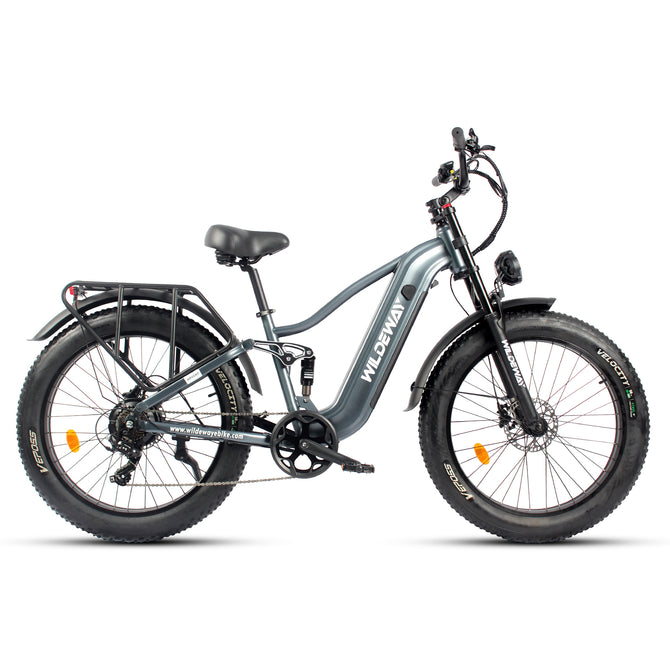
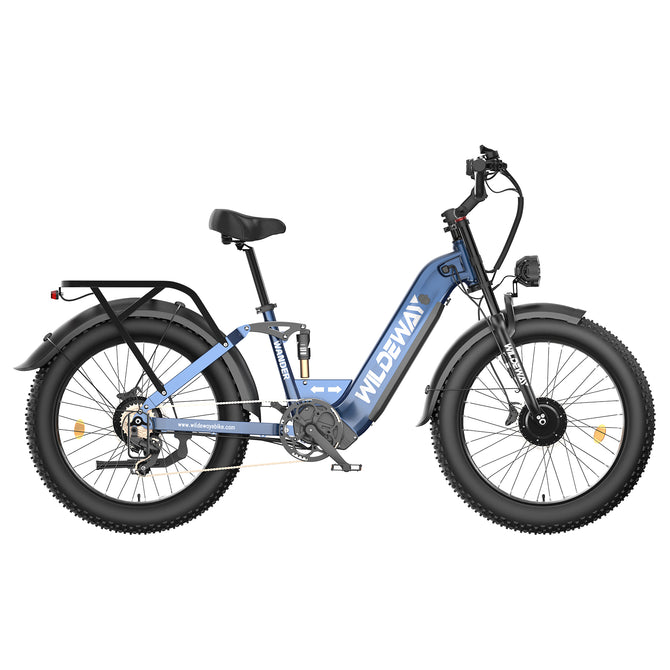
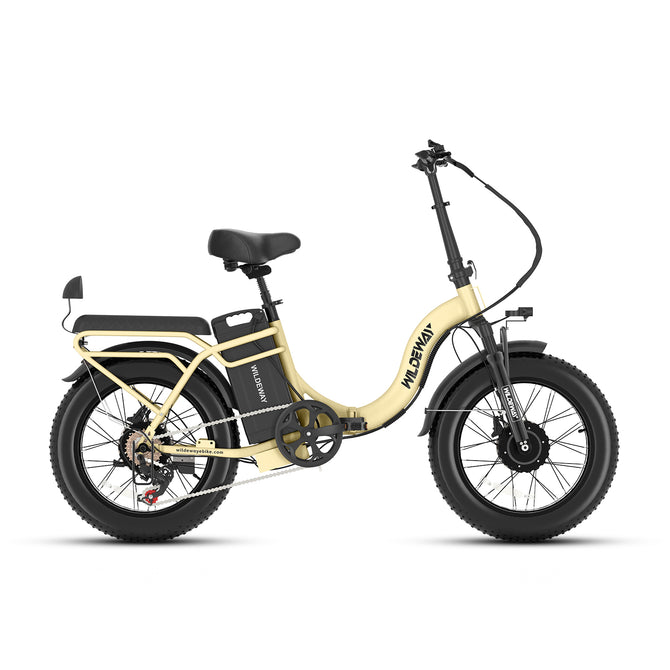
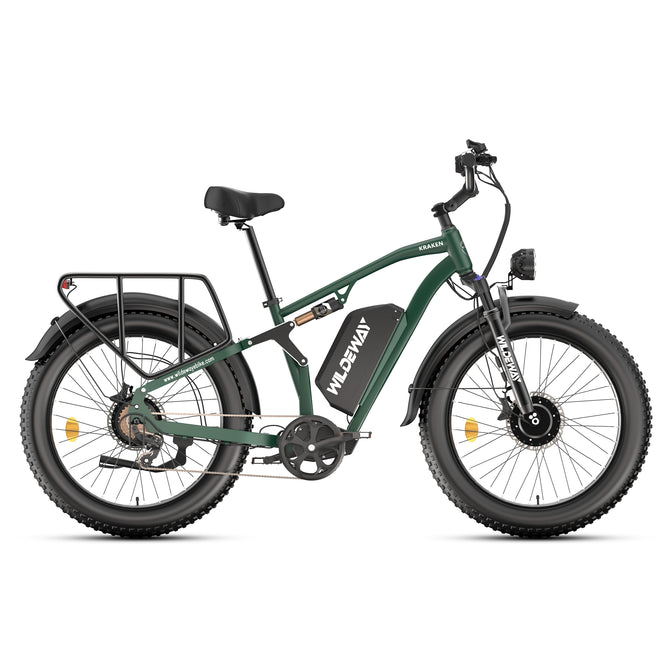
This is especially important when moving between different models such as the FW11 3.0 Pro, FW11S 3.0 Pro, SummitX, Wander Ultra and KRAKEN.
Do not combine battery or charger components between models unless WILDEWAY specifically confirms compatibility.
8. Don't Leave Charging Batteries Unattended Overnight
The CPSC recommends that consumers remain present while charging micromobility products and never charge them while sleeping. U.S. Consumer Product Safety Commission
That makes overnight charging a poor habit.
Instead:
- Start charging when you are awake.
- Place the battery in an appropriate location.
- Check the charging process periodically.
- Follow the manufacturer's instructions when charging is complete.
- Disconnect the charger as instructed.
The objective is simple: don't create a situation where a developing battery or charger problem can continue unnoticed for hours.
9. Keep Water Away From Charging Connections
E-bikes are designed for practical outdoor use, but that does not mean charging connections should be wet.
Before charging:
- Dry the battery connection area.
- Check for visible moisture.
- Inspect the charging port.
- Make sure connectors are clean and undamaged.
- Follow the manufacturer's instructions regarding water exposure.
The CPSC's 2025 warning involving certain Rad Power Bikes batteries specifically identified exposure of the battery or harness to water and debris as part of the reported hazard scenario. U.S. Consumer Product Safety Commission
If your bike has recently been ridden in rain, allow the appropriate components to dry before charging according to the manufacturer's instructions.
Never spray water directly into a charging port.
10. Understand Long-Term Battery Storage
If you will not ride your e-bike for an extended period, battery storage becomes part of maintenance.
Health Canada recommends storing lithium-ion batteries at approximately 50% charge during extended periods of non-use and checking them about every three months. Canada
For long-term storage:
- Follow the manufacturer's storage instructions.
- Keep the battery in a dry location.
- Avoid extreme temperatures.
- Keep it away from direct sunlight.
- Keep it away from flammable materials.
- Do not place heavy objects on top of the battery.
- Check the battery periodically.
This can be especially useful for seasonal riders who store an e-bike during winter.
11. Know When a Battery Should Stop Being Used
Stop using a battery if you notice unusual behavior such as:
- Swelling
- Bulging
- Smoke
- Strange odor
- Excessive heat
- Hissing
- Popping
- Visible damage
- Melting
- Unexpected charging behavior
Health Canada and Canadian fire-safety guidance both identify unusual heat, swelling, odor and abnormal sounds as warning signs that require attention. Canada
Do not continue riding simply because the battery still provides power.
A battery showing abnormal physical or electrical behavior should be evaluated according to the manufacturer's safety procedure.
12. Dispose of Old or Damaged Batteries Properly
Never place a lithium-ion e-bike battery in:
- Household garbage
- Curbside recycling
- Ordinary recycling bins
Health Canada classifies these batteries as hazardous waste and recommends contacting the local municipality for safe disposal instructions. Canada
The CPSC similarly advises consumers not to put hazardous lithium-ion batteries into trash or general recycling. U.S. Consumer Product Safety Commission
Disposal rules can vary between cities, states and provinces.
Before disposing of a battery, contact your local household hazardous-waste program or battery recycling service and tell them that you have an e-bike lithium-ion battery.
E-Bike Battery Charging Checklist
| Before Charging | During Charging | After Charging |
|---|---|---|
| Inspect battery | Use the correct charger | Follow manufacturer's instructions |
| Check for swelling | Charge on a stable surface | Disconnect as instructed |
| Check connectors | Keep away from combustible materials | Store charger appropriately |
| Allow cold battery to warm | Keep visible/observable | Check for unusual heat or odor |
| Confirm charger compatibility | Don't cover the battery | Keep battery dry |
| Keep area dry | Don't use damaged equipment | Store correctly if not riding |
E-Bike Battery Safety for Different WILDEWAY Riding Styles
Different WILDEWAY models can support different types of riding, but the same fundamental battery-safety principles apply.
Daily commuting
For riders using an e-bike for commuting, establish a consistent charging location at home. Avoid leaving the battery charging in a workplace hallway, crowded storage room or other location where it cannot be appropriately monitored.
Family and recreational riding
If an e-bike is used around the family, keep batteries, chargers and keys away from young children. Health Canada specifically recommends storing lithium-ion batteries out of the sight and reach of children. Canada
Outdoor adventure
For riders using models such as the SummitX, Wander Ultra or KRAKEN for longer outdoor trips, battery condition becomes particularly important.
Inspect the battery and electrical connections after demanding rides, especially after exposure to rain, mud, impacts or rough terrain.
Folding-bike transportation
When transporting a folding e-bike in an SUV or RV, follow the manufacturer's battery-removal and transportation instructions. Do not leave a battery exposed to excessive heat inside a parked vehicle.
Frequently Asked Questions
Can I charge my e-bike overnight?
It is better not to. The CPSC recommends being present while charging micromobility products and specifically advises against charging while sleeping. U.S. Consumer Product Safety Commission
Can I use a universal e-bike charger?
Do not assume that a “universal” charger is compatible. The CPSC has warned that chargers can physically fit while still being electrically incompatible. Use the charger supplied with your e-bike or a manufacturer-approved replacement. U.S. Consumer Product Safety Commission
Can I charge an e-bike battery when it is cold?
Health Canada advises bringing lithium-ion batteries to room temperature before use and not charging them below freezing temperatures. Canada
What should I do if my e-bike battery is swollen?
Stop using it and do not charge, open or modify it. Contact the manufacturer or appropriate local authorities/service provider for safe handling and disposal instructions.
Can I use an aftermarket e-bike battery?
Only use a battery specifically approved for your e-bike by the manufacturer. Health Canada recommends original replacement batteries and warns against modifying or building lithium-ion packs. Recalls and Safety Alerts
Where should I store an e-bike battery?
Keep it in a dry location at an appropriate temperature, away from direct sunlight, extreme temperatures, children and combustible materials. For extended storage, follow the manufacturer's recommended charge level. Health Canada recommends approximately 50% charge for long-term storage. Canada
Can I charge my e-bike in a garage?
A garage may be convenient, but it can contain gasoline, solvents, cardboard and other combustible materials. Follow the manufacturer's charging instructions and choose a dry, stable location away from combustible materials and exit routes.
Conclusion
Safe e-bike battery charging is mostly about good habits.
Use the correct charger. Inspect the battery before charging. Keep damaged or modified batteries out of service. Avoid charging below freezing temperatures. Charge on a stable surface away from combustible materials, and do not charge while sleeping.
For long-term storage, follow the manufacturer's instructions and keep the battery in a dry environment away from extreme temperatures. When the battery reaches the end of its useful life, use your local hazardous-waste or battery-recycling program rather than putting it in household garbage.
Whether you're commuting on an FW11, exploring trails on a SummitX, traveling with a folding WILDEWAY e-bike or preparing a high-performance model such as the KRAKEN for an outdoor adventure, battery safety should be part of the ride—not an afterthought.
Explore the WILDEWAY electric bike collection and choose an e-bike that matches your riding environment, distance and lifestyle.


