

What to Do After an E-Bike Crash or Tip-Over
A parked e-bike falls against a garage wall. A front wheel slides on loose gravel. A pedal catches an obstacle and the ride ends abruptly. Each incident leaves a different question about the bike, especially when the battery, controls, or wheels took the hit.
Start with the people involved and the safety of the location. Then assess whether there is a battery emergency, record what happened, and arrange the right help. A bike that looks straight can still need inspection after an impact. Trek’s current owner’s manual advises a thorough bike-shop inspection after a crash or impact because damage may be difficult to see. Trek Bicycle Owner’s Manual, April 2026
Check People and the Location First
Pause before lifting the bike. Check yourself and anyone else involved for injuries. Call 911 for a medical emergency or immediate danger, give your location, and follow the dispatcher’s instructions. A trail name, entrance, street intersection, or map location can help responders find you. Keep other riders clear of moving traffic and any damaged equipment. FDNY emergency-call guidance
Once everyone is safe, switch off the e-bike if you can reach the control safely. If a battery is smoking, making unusual noises, or showing other warning signs, move away and call for help. Leave tools, bags, and photographs until you have dealt with the immediate danger.
Look for Battery Warning Signs Before Handling the Bike
Treat Smoke, Leaks, and Shape Changes as Urgent
From a safe position, look for smoke, leaking fluid, swelling, changes in color or shape, or unusual odors and noises. NYC’s battery-safety guidance calls for stopping use immediately and calling 911 when these warning conditions appear. If you suspect an active battery failure, keep people away and call from a safe location. Follow emergency responders’ instructions. NYC311 lithium-ion battery safety
Do not carry a smoking or visibly failing battery into a vehicle or building. Avoid trying to unlock, detach, or open it. A damaged battery needs a response suited to its condition, and an emergency dispatcher can guide that response.
A Quiet Battery Still Needs Attention After Damage
A dent, cracked housing, torn connector, or impact against the battery mount should be reported to the manufacturer before charging or using the pack again. Health Canada advises against using damaged lithium-ion batteries and explains that damaged packs can develop internal short circuits. Follow the manufacturer’s instructions for the exact battery and describe the impact clearly. Health Canada lithium-ion battery safety
Keep the charger disconnected while seeking guidance about suspected battery damage. If disposal is needed, ask your municipality how it accepts a damaged e-bike battery. Tell the collection service about its condition before taking it anywhere.
Record What You Can See Without Taking Parts Apart
When the location is safe and there are no battery warning signs, take photographs from both sides and then closer views of contact points. Record which side landed, what the bike struck, and whether a wheel, handlebar, or battery hit first. This gives the technician a starting point.
The U.S. Consumer Product Safety Commission lists handlebars, brakes, throttle, lights, tires, cables, and frame among the areas riders should check for damage. After a fall, look for changes in those areas and photograph them for service. CPSC micromobility safety guidance
| Area | Useful observations to record | Reason to stop and seek service |
|---|---|---|
| Battery and mount | Where the impact occurred, housing marks, and a displaced latch or connector | Suspected pack damage, loose mounting, or exposed wiring |
| Handlebar and controls | Lever position, bar alignment, and trapped cables | Bent controls, restricted steering, or a throttle that appears damaged |
| Wheels and tires | Rim marks, a deflated tire, and clearance around each wheel | A wheel sitting out of line, visible deformation, or damage near an axle |
| Brakes | New rotor marks, a damaged hose, or fluid around a brake | Leakage, a cracked or deformed rotor, or changed lever movement |
| Frame, fork, and suspension | Contact marks and the locations that hit the ground | A suspected crack, bent part, or changed alignment |
| Drivetrain and accessories | Derailleur position, chain location, and loose rack or fender parts | Parts pushed toward a wheel or any uncertainty about secure attachment |
This visual record helps explain the event. A technician can decide which areas need closer examination and whether parts must be removed. Leave structural alignment, suspension work, and electrical disassembly to qualified service.
Give the Brakes Particular Attention
A fall can strike a lever, hose, caliper, or rotor. Report visible leakage, a cracked or deformed rotor, or a lever that has moved from its usual position. Shimano’s hydraulic-brake guidance warns against using a system with fluid leakage or a cracked or deformed rotor. It also warns that rotors and calipers can remain hot after braking. Keep fingers clear of the braking surfaces. Shimano hydraulic-brake safety guidance
The installed brake system determines the correct parts and service procedure. Tell the shop what is fitted, or send clear component photographs if you cannot identify it. Reaching for a wrench to straighten the lever can hide useful evidence and leave an underlying problem unresolved.
Check Whether the Helmet Took an Impact
If your bicycle helmet hit during the fall, replace it before another ride. CPSC explains that impact damage can reduce protection even when the damage is invisible. Keep the helmet’s model information if you need to ask the manufacturer about its replacement process. An unmarked shell alone cannot establish that an impacted helmet remains protective. CPSC bicycle-helmet guidance
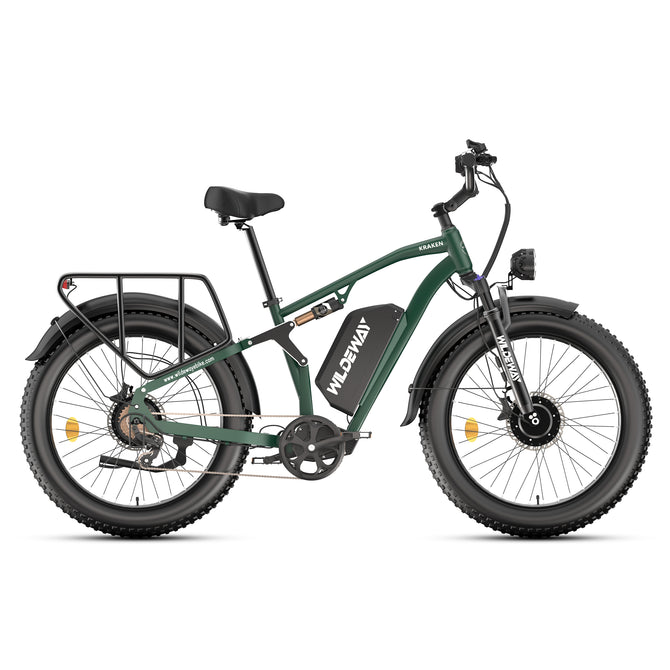
Apply the Inspection Plan to the WILDEWAY KRAKEN
The current U.S. and Canadian KRAKEN pages consistently describe 26 × 4.0-inch tires, front and rear hub motors, and a suspension layout with an 80mm front fork and Horst-link rear suspension. After a fall, give the technician those details and photograph both motor-cable routes, the rear suspension area, and any point that struck the ground. KRAKEN U.S. specifications · KRAKEN Canadian specifications
For a support request, include your order number, model, photographs, and a short account of the impact. Note whether an error appeared at the time, without switching the bike on solely to recreate it. Ask what inspection is appropriate and what the service provider needs before accepting the bike. Contact WILDEWAY support
Arrange a Pickup That Matches the Bike’s Condition
Tell the pickup provider that the vehicle is an e-bike and describe any suspected battery damage before they arrive. Let them confirm whether they can accept it and what handling instructions apply. For a battery showing emergency warning signs, follow emergency-service instructions before making transport arrangements.
For a bike awaiting mechanical inspection, confirm loading equipment and restraint points with the provider. Share the exact model and configuration so they can assess the load. When a wheel is jammed or steering is restricted, explain that too. Keep the bike out of use until the required inspection and repairs are complete.
Frequently Asked Questions
Can I Ride Home If the Display Still Works?
A working display tells you that it has power. It cannot assess impact damage to the frame, brakes, wheels, or battery. After a significant impact or suspected damage, arrange inspection and recovery before riding again.
What If the Bike Simply Fell Off Its Kickstand?
Record where it landed and inspect for contact damage, changed controls, or pinched cables. Describe any uncertainty to a technician. Even a stationary fall can damage a component, and its consequences depend on what took the hit.
Should I Charge the Battery to See Whether It Works?
Keep a battery with suspected impact damage disconnected and contact the manufacturer. Describe the strike and send photographs if safe. Wait for instructions about inspection, further use, and any necessary disposal.
Should I Remove the Battery Before Pickup?
Ask the manufacturer and transport provider about your specific situation. Removal depends on the condition of the battery, mount, and latch. Leave a hot, leaking, smoking, or visibly failing pack alone and follow emergency instructions.
Conclusion
After a fall, take time to check people, recognize battery warning signs, and record the incident for service. Clear photographs and a concise description help a technician plan the inspection and a pickup provider prepare for recovery. For a KRAKEN, keep the current product information with your service records and contact WILDEWAY when you need model-specific guidance.


