

How to Transport a Folding E-Bike in an SUV or RV
A folding electric bike can expand what you do after arriving at a campground, national park gateway, beach town, or weekend cabin. Instead of moving the RV for every short trip, you can unfold the bike and ride to a store, trail entrance, restaurant, or scenic overlook.
However, folding does not automatically mean lightweight or easy to transport. Many long-range e-bikes are substantially heavier than conventional bicycles because they include a motor, battery, reinforced frame, suspension, wider tires, and cargo components.
Safe transportation begins with four questions:
-
Will the folded bike fit through the vehicle’s cargo opening?
-
Can you safely lift and control its weight?
-
Can the bike and battery be secured so they cannot move?
-
Is your rack, hitch, vehicle, or RV rated for the complete load?
Use this guide to plan the entire process before your next road trip.
The Short Answer
To transport a folding e-bike safely, measure the bike and vehicle first, remove loose accessories, switch the electrical system off, and remove the battery if the manufacturer permits it and doing so makes loading safer.
Load the bike using correct lifting technique or a ramp, protect vulnerable components, and secure the frame to suitable vehicle anchor points. If you use an exterior rack, confirm its per-bike weight rating, total capacity, tire compatibility, hitch requirements, and specific approval for use behind an RV.
Never assume that a standard bicycle rack can carry a heavy e-bike.
Choose the Right Transportation Method
The best method depends on your vehicle, the number of bikes, their weight, and how often you need access to them.
| Transportation method | Main advantage | What to verify |
|---|---|---|
| Inside an SUV or minivan | Protects the bike from weather and road debris | Cargo opening, interior dimensions, anchor points and safe visibility |
| Inside an RV storage compartment | Keeps the bike enclosed and out of sight | Door dimensions, floor capacity, ventilation and nearby equipment |
| Pickup bed | Easier loading and more open space | Tie-down points, weather protection and theft security |
| Hitch-mounted platform rack | Preserves interior cargo space | Rack capacity, hitch rating, tire width and RV approval |
| Small trailer | Useful for several heavy bikes | Trailer capacity, legal requirements and secure mounting |
Roof racks are generally less practical for heavy e-bikes because the rider must lift the bike overhead and the vehicle roof has its own load limit. Never place an e-bike on a roof rack unless the vehicle, crossbars, rack and mounting system are all specifically rated for the complete load.
1. Measure the Bike and Vehicle
Do not rely on a photograph or the word “folding.” Measure the actual bike in its folded configuration, including anything that remains installed.
Record:
-
Folded length
-
Folded width
-
Folded height
-
Handlebar position
-
Pedal position
-
Tire width
-
Lowest protruding component
-
Cargo-opening width and height
-
Interior floor length
-
Height beneath shelves or covers
The FW11 3.0 Pro as approximately 37 × 19.3 × 29.5 inches. The FW11S 3.0 Pro is listed at approximately 42.5 × 18.1 × 28.3 inches.
These figures are useful for preliminary planning, but measure your own bike and vehicle before travel. Accessories, baskets, mirrors, cargo boxes, seat position and production variations can change the usable dimensions.
Create a cardboard floor template if the available space is tight. This provides a simple way to test the planned position without repeatedly lifting the bike.
2. Understand the Real Lifting Weight
The current FW11 and FW11S product pages list a bike weight of approximately 72.8 pounds without the battery and a separate battery weight of approximately 22 pounds. That produces a combined transport weight of roughly 94.8 pounds before adding bags, locks or accessories.
This distinction matters. A product page may list the bike and battery separately, while a rack manufacturer may require the actual total weight placed on the rack.
Before lifting:
-
Remove panniers, baskets and loose cargo
-
Remove the battery when permitted by the manual
-
Lower the seat if necessary
-
Fold and secure the pedals and handlebar
-
Ask another adult for help when the load is difficult to control
-
Use a loading ramp if appropriate
-
Keep the bike close to your body
-
Avoid twisting while supporting the weight
Removing a 22-pound battery can make the bike easier to handle, but the remaining bike is still substantial. Do not attempt a solo lift if you cannot control it safely.
3. Prepare the E-Bike Before Folding
Turn the bike off before moving or folding it. Remove the key and make sure the throttle cannot be activated accidentally.
Then complete a short preparation sequence:
-
Remove all loose cargo.
-
Disconnect phone mounts or fragile accessories.
-
Secure or remove mirrors.
-
Lower the seat post if required.
-
Fold the frame according to the owner’s manual.
-
Confirm the folding latch is fully positioned.
-
Use a soft strap to keep the folded sections together.
-
Protect the display, brake levers and electrical connectors.
-
Keep the chain away from upholstery and luggage.
-
Place keys and small hardware in a labeled bag.
Do not use the brake hoses, electrical cables, display, fenders, derailleur or battery handle as tie-down points.
Avoid forcing the folded bike into a smaller space. Pressure against a derailleur, rotor, cable or display can create damage that may not be obvious until the next ride.
4. Load the Bike Into an SUV or RV
Clear the loading area before lifting. Fold the rear seats, move unrelated luggage away, and place a protective mat or rigid cargo liner on the floor.
For a heavy folding e-bike, a low loading height is valuable. A portable ramp may reduce lifting, but it must be wide enough, stable, and rated for the weight of the bike. The person loading the bike still needs to control its movement.
Once the bike is inside:
-
Keep it away from vehicle pedals and driver controls
-
Do not block required mirrors or visibility
-
Prevent the bike from contacting glass
-
Keep sharp pedals and rotors away from upholstery
-
Place protective padding between the bike and interior panels
-
Avoid stacking heavy luggage on top of the bike
-
Keep emergency equipment accessible
-
Ensure passengers are not seated beside an unsecured bike
A folded e-bike can become a heavy moving object during sudden braking. Folding it reduces its size; it does not remove the need for securement.
5. Secure the Bike Against Movement
Use the vehicle’s approved cargo anchor points whenever available. Soft-loop straps can help create a secure connection around suitable structural parts of the frame without scraping the finish.
Control movement in multiple directions:
-
Forward during hard braking
-
Backward during acceleration
-
Sideways during cornering
-
Upward over bumps
-
Downward against the cargo floor
Apply enough tension to prevent movement, but do not crush cables, hoses, battery mounts or folding mechanisms. Avoid compressing the suspension excessively for long periods unless the bike or rack manufacturer specifically recommends it.
After securing the bike, push it firmly from several directions. If it rocks, slides, unfolds or contacts the vehicle, revise the setup before driving.
Stop after the first few miles and check the straps again.
6. Using a Hitch-Mounted E-Bike Rack
A platform-style hitch rack is often more suitable for a heavy e-bike than a lightweight hanging rack, but compatibility must be confirmed—not assumed.
Check all of the following:
-
Maximum weight per bicycle
-
Total rack capacity
-
Number of bicycles permitted
-
Tire-width range
-
Wheelbase range
-
Frame and fender compatibility
-
Receiver size
-
Vehicle hitch rating
-
Available tongue-weight capacity
-
Clearance from the ground and exhaust
-
Visibility of the license plate and lights
-
Approval for motorhome, travel-trailer or fifth-wheel use
The rack’s advertised capacity is only one part of the calculation. The vehicle hitch and receiver also have limits, and the rack itself adds weight.
For example:
Rack weight + Bike 1 + Bike 2 + accessories = total load applied to the hitch
Some racks approved for passenger vehicles are not approved for the rear of an RV or travel trailer. The longer rear overhang and additional movement can place different forces on the rack. Look for an explicit RV-use statement from the rack manufacturer.
Remove batteries before rack transport if the bike and rack manufacturers recommend it. Secure the bikes with the rack’s primary retention system and any required additional straps. Do not use a cable lock as the main structural tie-down.
Before driving, verify that the rack does not interfere with the vehicle’s exhaust, doors, reversing sensors, lights or license plate.
7. Transport the Battery Carefully
A removable e-bike battery should be treated as a high-energy component, not ordinary luggage.
Before departure:
-
Inspect it for cracks, swelling, leaking or impact damage
-
Make sure the power is off
-
Protect the terminals from contact with metal objects
-
Place it in a stable position where it cannot slide or fall
-
Keep it dry
-
Keep it away from direct sunlight and extreme heat
-
Do not place heavy objects on top of it
-
Do not leave it loose near tools, fuel or flammable materials
Health Canada advises storing lithium-ion batteries in a dry location away from direct sunlight, extreme temperatures and flammable or explosive materials. It also recommends not using damaged or modified batteries.
Do not charge the battery inside a moving vehicle. At a campground or destination, use only the manufacturer-supplied or approved charger and remain present while charging. The U.S. Consumer Product Safety Commission advises owners not to charge micromobility products while sleeping or away from home.
Follow the bike and battery manuals whenever their instructions are more specific than general guidance.
8. Complete a Pre-Drive Check
Before every trip, walk around the vehicle and check:
-
Bike is switched off
-
Battery is locked or independently secured
-
Folding latch is controlled
-
Straps are tight
-
Wheels cannot rotate freely
-
Handlebars cannot strike the vehicle
-
Rack arms are fully engaged
-
Rack tilt and folding mechanisms are locked
-
Lights and license plate remain visible
-
Doors and storage compartments are fully closed
-
No straps are hanging near the road or wheels
-
Vehicle load limits have not been exceeded
Repeat the check after driving over rough roads or stopping for fuel.
If the bike is carried externally, inspect the setup whenever you stop. Vibration, rain and temperature changes can affect straps and contact points.
9. Inspect the Bike Before Riding
After arrival, unload the bike in a level, traffic-free area. Do not unfold it beside moving campground or parking-lot traffic.
Before riding, confirm:
-
Frame hinge locks correctly
-
Handlebar stem is secure
-
Seat post is correctly positioned
-
Battery is locked in place
-
Electrical connectors are clean and dry
-
Tires hold pressure
-
Wheels rotate without rubbing
-
Brake rotors are not bent
-
Both brakes operate normally
-
Derailleur and chain move correctly
-
Lights and display work
-
No new cracks, warning codes or unusual noises appear
The CPSC recommends checking the frame, handlebars, brakes, throttle, tires, cables and lights for damage before riding.
Take a short test ride before joining a road or trail. Transportation damage is easier to identify at low speed in a controlled area.
Can You Take a Large E-Bike Battery on an Airplane?
Do not assume that a removable battery makes an e-bike suitable for airline travel.
The Federal Aviation Administration generally limits ordinary passenger lithium-ion batteries to 100Wh, with airline approval required for certain batteries between 101Wh and 160Wh. Larger passenger batteries normally fall outside these allowances.
The FW11 and FW11S 3.0 Pro batteries are currently listed at 1,680Wh, far above the ordinary passenger limit. Transporting a large e-bike battery by air may require a specialized dangerous-goods shipping process. Contact the airline and a qualified shipping provider before making travel arrangements.
Final Transport Checklist
| Check | Confirm before driving |
|---|---|
| Fit | Bike passes through the opening and fits the cargo area |
| Weight | Vehicle, rack, hitch and storage floor support the load |
| Battery | Undamaged, switched off and secured |
| Folding parts | Frame, stem and pedals cannot move unexpectedly |
| Securement | Bike cannot slide, tip, unfold or strike the vehicle |
| Rack | Correctly installed and approved for the vehicle or RV |
| Visibility | Lights, plate, mirrors and driver view remain clear |
| Arrival inspection | Brakes, tires, hinge, battery and controls checked |
Frequently Asked Questions
Should I remove the battery before putting an e-bike in an SUV?
Removing the battery can reduce lifting weight and may make the bike easier to handle. Follow the manufacturer’s instructions, protect the removed battery from damage and secure it separately so it cannot slide or contact metal objects.
Will a folding e-bike fit in every SUV?
No. Cargo openings, interior dimensions and folded-bike dimensions vary. Measure the actual bike and vehicle before purchasing or traveling.
Can I carry an e-bike on a normal bicycle rack?
Only when the rack’s per-bike capacity, total capacity, tire compatibility and mounting system support the e-bike. Many racks designed for conventional bicycles are not rated for heavy electric bikes.
Can I use the same rack behind an RV?
Not necessarily. A rack may be approved for a passenger car but not for an RV, travel trailer or fifth wheel. Use only a rack whose manufacturer explicitly approves the intended installation.
Can I charge an e-bike battery inside an RV?
Only in accordance with the battery, charger and RV electrical instructions. Use the approved charger, keep the charging area dry and clear, remain present, and never charge while sleeping.
How heavy are the FW11 and FW11S when the battery is installed?
The current product pages list approximately 72.8 pounds for the bike without the battery and approximately 22 pounds for the battery. The combined weight is therefore roughly 94.8 pounds before adding accessories.
Plan the Transport Before the Adventure
A folding e-bike can be an excellent companion for camping, RV travel and weekend road trips, but convenient transportation depends on preparation.
Measure first, understand the actual weight, protect the battery, secure the frame and use equipment rated for the complete load. A few minutes spent checking the setup can protect the bike, the vehicle and everyone traveling around it.
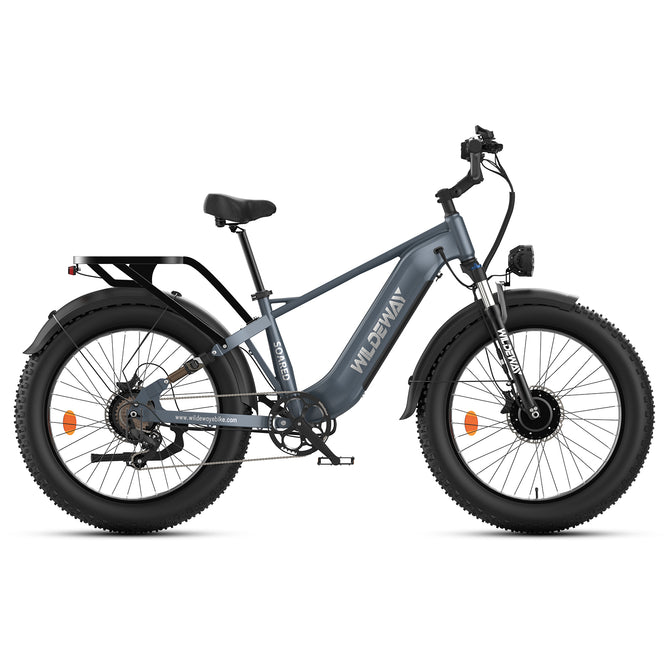
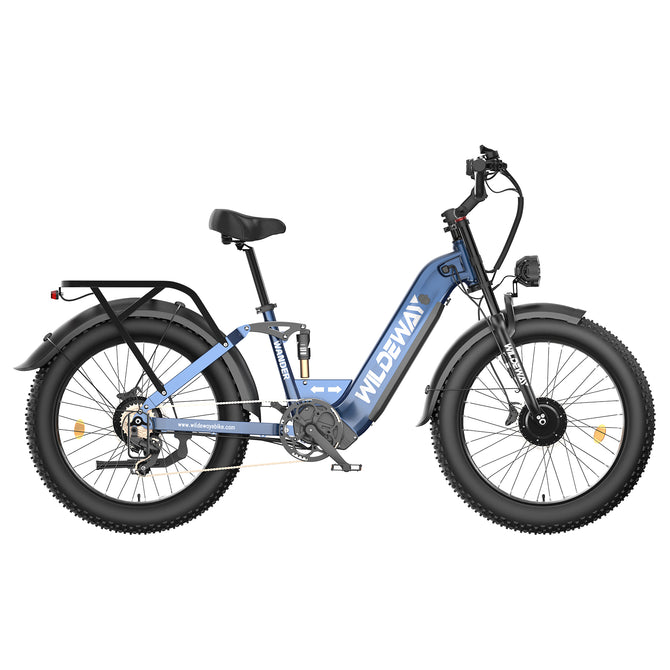
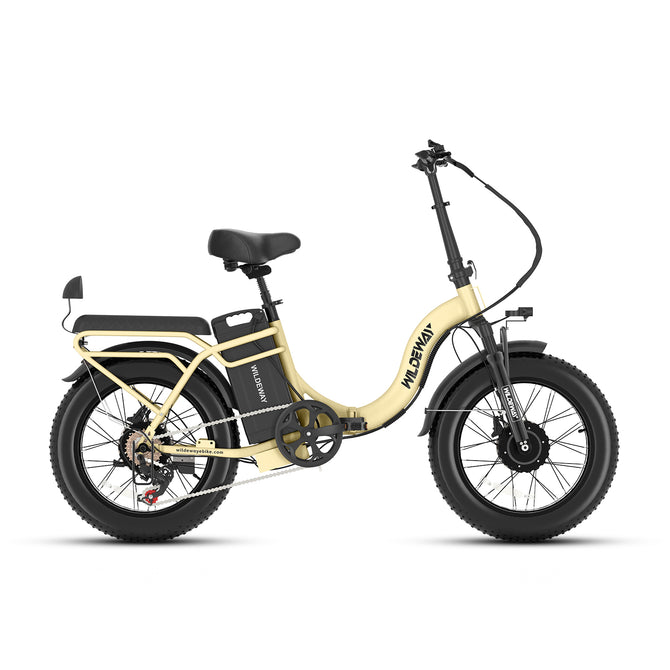
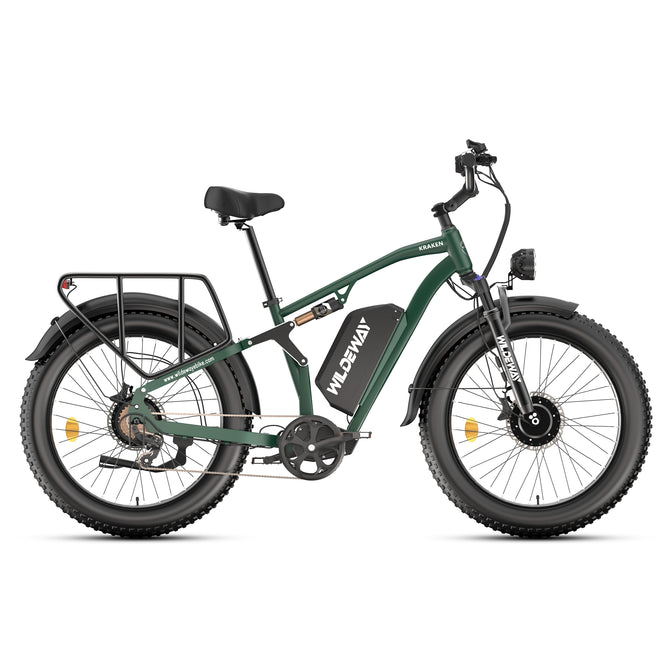
Compare the step-over WILDEWAY FW11 3.0 Pro and step-through WILDEWAY FW11S 3.0 Pro to find a folding configuration that fits your riding and travel plans.


