

Dual-Motor (AWD) vs. Mid-Drive E-Bikes: Which System Dominates 35°+ Steep Incline Climbing?
When you’re standing at the base of a brutal 35° to 40° incline —whether it’s a steep mountain trail, a loose gravel fire road, or a paved urban hill that makes cars struggle—one question matters most: Will your e-bike actually get you to the top?
For years, traditional e-bike purists praised Mid-Drive motors as the undisputed kings of climbing. But as high-performance All-Wheel Drive (AWD) Dual-Motor e-bikes enter the market, that crown is slipping fast.
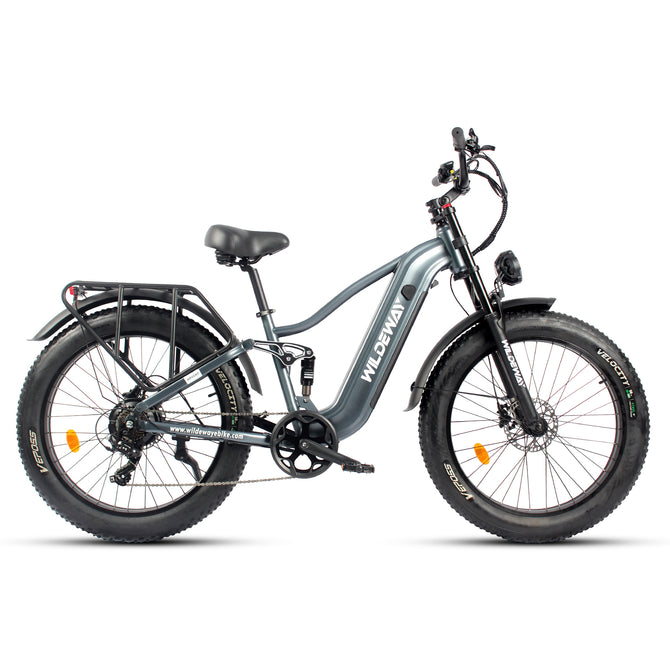
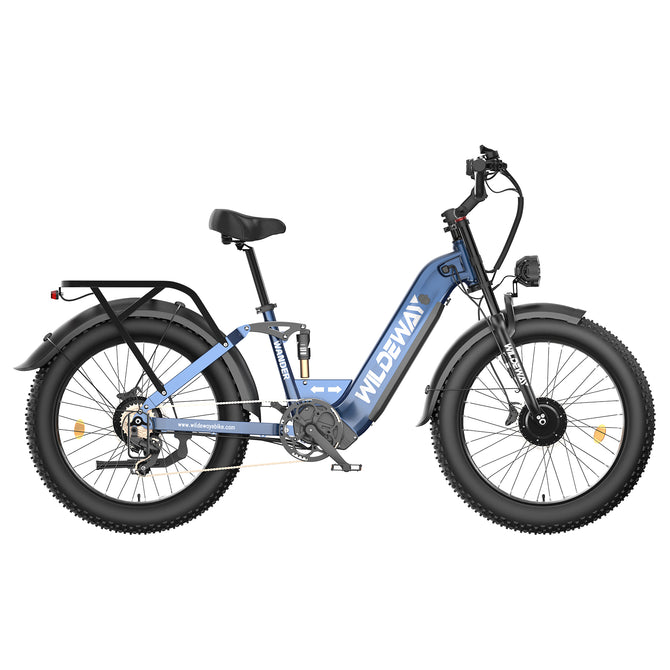
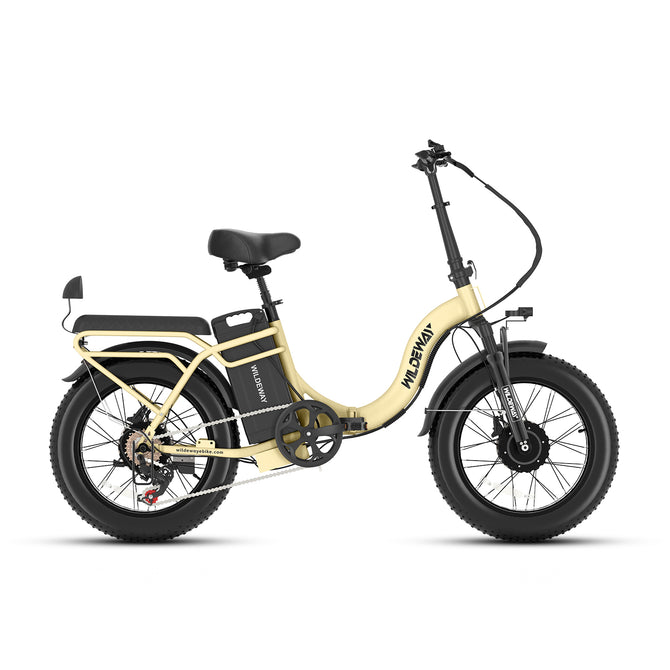
If you are choosing between a mid-drive machine and a dual-motor monster (like the Wildeway SummitX or Wander series), this guide breaks down the real physics of hill climbing: traction, mechanical torque, chain wear, and value.
Understanding the Contenders
Before diving into the physics of 35°+ inclines, let’s quickly define how each drive system transfers power to the dirt:
-
Mid-Drive Systems: A single motor is positioned at the crank/pedals. It passes its mechanical energy through your bike’s chain, cassette, and rear derailleur to spin the rear wheel.
-
Dual-Motor (AWD) Systems: Two independent hub motors—one in the front wheel hub and one in the rear wheel hub—work in unison. Power is delivered directly to both tires simultaneously without involving the chain or gears.
1. Traction & Weight Transfer: The Secret to Extreme Inclines
When you climb an incline steeper than 25 degrees, basic physics alters your ride dynamic: gravity pulls your body weight backward onto the rear tire, lightening the front end.
-
The Mid-Drive Problem: Because a mid-drive only powers the rear tire, applying high torque on a steep, loose surface (dirt, snow, sand, or gravel) often causes the rear wheel to spin out. Worse yet, on a paved steep hill, excessive rear-wheel torque can lift your front tire off the ground (unwanted wheelies), forcing you to abort the climb.
-
The AWD Dual-Motor Advantage: Dual-motor e-bikes utilize front-wheel pull + rear-wheel push. Even as weight shifts backward, the front hub motor actively grabs the trail ahead, pulling the bike up the incline. This continuous dual-point traction prevents rear wheel spinouts and keeps your front wheel planted securely on the ground.
Verdict for Traction: AWD Dual-Motors Win. On loose or extreme 35°+ slopes, two contact points under power always beat one.
2. Drivetrain Stress: The Hidden "Chain Snap" Trap
One critical flaw of mid-drive e-bikes on extreme hills is often overlooked until it happens mid-ride: exponential chain strain.
When you pedal a mid-drive up a 35° grade, the motor feeds hundreds (or thousands) of watts directly through your bicycle chain.
-
If you need to switch gears under load, you risk bending gear teeth, slipping gears, or snapping the chain outright.
-
Stop mid-hill on a mid-drive? Starting up again on a steep slope puts catastrophic torque on a single chain link.
In contrast, AWD hub motors bypass the chain entirely. The front and rear motors drive the wheel hubs directly.
-
You can shift mechanical gears whenever you want without stripping teeth.
-
Your drivetrain chain only experiences the force of your human legs, resulting in near-zero broken chains and drastically lower long-term maintenance costs.
3. Raw Power & Hill-Start Torque: Watts vs. Gear Multiplication
Mid-drive advocates argue that by running through the bike's mechanical cassette, a 750W mid-drive motor can leverage low gears for climbing. While true on gentle slopes, extreme 35°+ inclines demand massive raw peak output.
Most street-legal mid-drives cap out between 500W and 1000W peak power due to thermal throttling and chain limits.
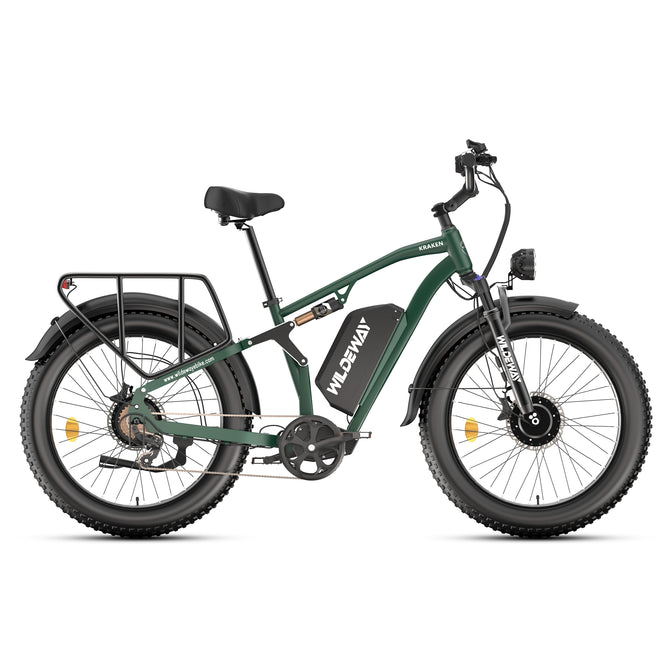
On the other hand, heavy-duty AWD platforms—such as the Wildeway SummitX (2000W–2300W peak) or Wildeway Wander / Kraken (up to 3000W peak AWD) —deliver massive raw power and over 120+ N.m of instant torque straight to the ground.
When you come to a complete stop on a steep incline, an AWD system’s throttle instantly engages dual motors to launch you forward without demanding tricky mechanical gear shifting.
Direct Comparison: AWD Dual-Motor vs. Mid-Drive
| Feature / Metric | Mid-Drive E-Bikes | Wildeway AWD Dual-Motor E-Bikes |
| Drive Points | Rear Wheel Only |
Front + Rear Wheel (AWD) |
| Peak Power Output | Typically 500W – 1000W |
2000W – 3000W Peak |
| 35°+ Incline Traction |
High risk of rear wheel spinout |
Superior front-pull + rear-push traction |
| Chain & Gear Wear | Extremely High (Motor strains chain) |
Zero motor strain on chain/gears |
| Hill-Start Ease | Difficult; requires low gear prep |
Instant throttle torque from 0 RPM |
| Loose Surface Capability | Moderate (Snow/Sand slips) |
Dominant on Dirt, Snow, Sand & Gravel |
| Price-to-Performance | High cost ($3,500 - $6,000+) |
High value / Heavy-duty specs |
4. Range & Battery Capacity Requirements for Steep Climbing
Climbing steep hills consumes battery energy fast. A motor running at max output on a 35° slope will drain a standard 14Ah (672Wh) battery in a matter of minutes.
Because dual motors draw more current during peak acceleration, they require high-capacity energy reservoirs. This is why Wildeway equips its AWD climbing models with ultra-large battery setups—ranging from 48V 32Ah (1536Wh) up to massive 60Ah capacity options.
With 1536Wh+ of energy reserves, you can conquer repeated long-distance hill climbs without living in constant "range anxiety."
Final Verdict: Which System Reigns Supreme?
-
Choose a Mid-Drive if: You are an avid traditional cyclist who prioritizes lightweight frame balance, subtle pedal-assist feel, and stays primarily on smooth, moderate trail gradients (<20°).
-
Choose an AWD Dual-Motor if: You face extreme 35°+ inclines, carry heavy loads/payloads, ride on loose dirt, mud, or snow, and want raw throttle climbing power without worrying about snapped chains or expensive mid-drive repairs.
For true off-road conquerors, heavy riders, and thrill-seekers facing the steepest terrain, All-Wheel Drive (AWD) is no longer optional—it is the ultimate hill-climbing dominant system.
🚀 Ready to Conquer Any Incline?
Explore the Wildeway AWD Dual-Motor Collection—featuring the SummitX Dual-Motor Folding Flagship and the 3000W Peak Wander / Kraken Full-Suspension Beasts. Dominate the steepest hills with unmatched traction and massive 32Ah+ long-range battery options!


%20vs.%20Mid-Drive%20E-Bikes:%20Which%20System%20Dominates%2035%C2%B0+%20Steep%20Incline%20Climbing?)